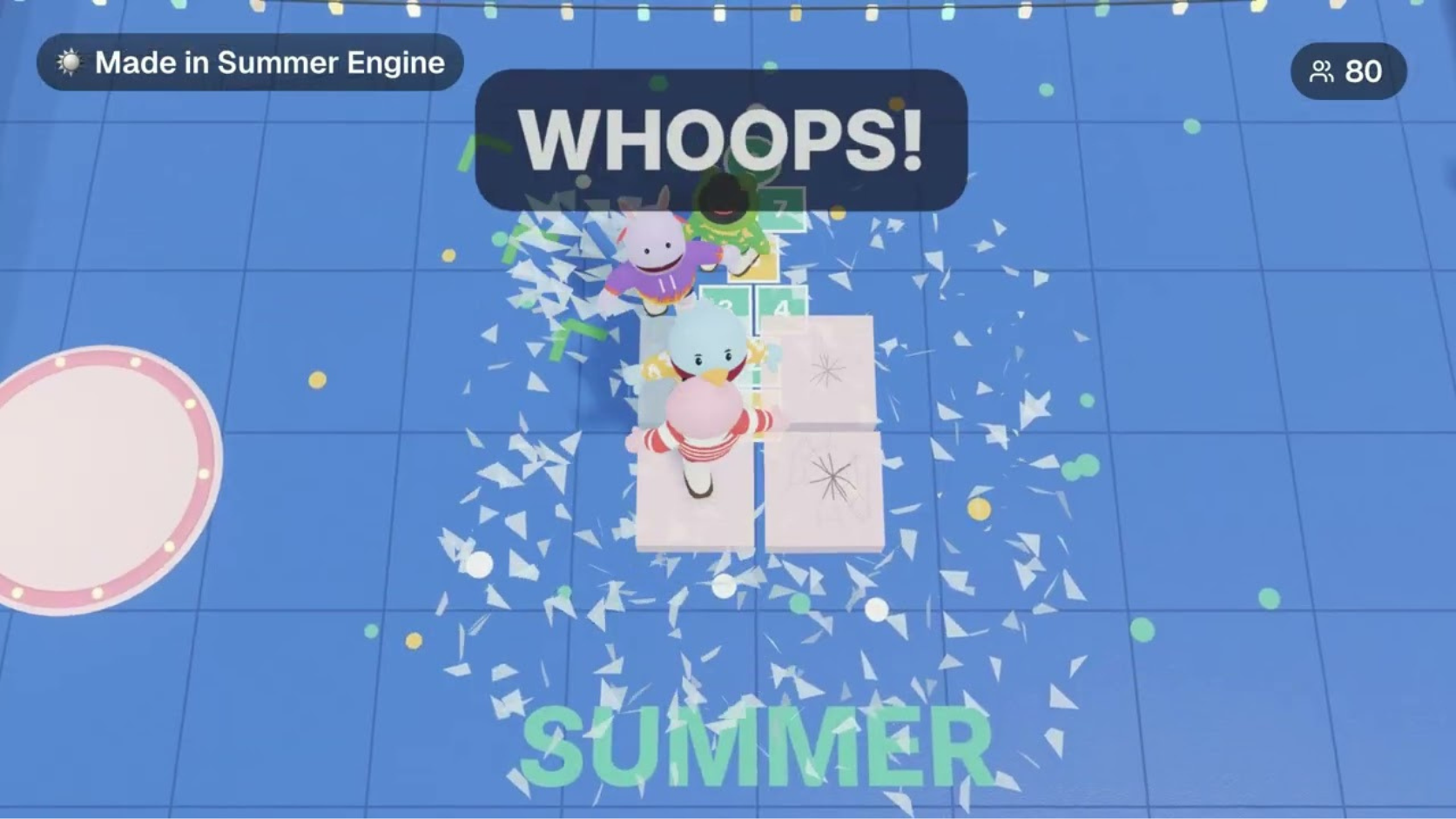
Summer Engine is building for the gap between an AI-generated game prototype and a game people can actually play together. Its founders say the difficult part was not producing an impressive first scene, but connecting multiplayer, publishing, analytics and monetization into something usable.
The Fall 2026 Y Combinator company offers a game engine that accepts natural-language instructions while retaining editable scenes, code, art and sound. A creator can describe a game, change the resulting project and publish it, rather than being limited to a generated video or a disposable browser demo.
Summer's website positions the engine for both 2D and 3D work. It lists physics, animation and gameplay tools, alongside native C++ and C# access for developers who want more direct control. That makes the AI an interface into a broader development environment, not the only way to work on a project.
The same approach extends to outside agents. Summer says Claude Code, Codex, Cursor and other tools can use its capabilities through an MCP interface or command-line tool. The intended workflow lets a creator choose an assistant without abandoning the engine's assets, publishing system or game data.
Watch the original launch video.
Multiplayer is one of the main pieces the company wants to remove from a developer's infrastructure checklist. Summer says it provides servers, matchmaking, parties and player saves. Publishing on Summer Games can also be driven through its agent interfaces, with the website describing user approval and automated checks before a game goes live.
That does not mean every distribution platform has the same publishing process. Summer lists support for desktop, mobile and web games and says creators can publish on services including Steam. Its website also notes that PlayStation and Xbox require additional custom work. Platform-specific requirements remain distinct from generating the game itself.
The company says creators own their games and can sell them. It combines that promise with a large community asset library, described in the launch as containing more than 240,000 assets. The current homepage displays a slightly lower rounded count, so the practical point is the breadth of reusable material rather than a precisely reconciled total.
Analytics closes another part of the development loop. Summer says agents can read a game's analytics through the same tooling, allowing creators to move from building to observing how people play and planning changes. The product is trying to keep those stages together rather than handing the creator a project that requires several new systems after launch.
Co-founders Mathias Heide and Marcus Teller describe themselves as gamers who rebuilt an engine for agents. The launch reports more than 60,000 users and revenue growth of 40% over thirty days, both company-provided figures. It does not disclose the revenue base, paying-user count or activity definition, so those numbers do not establish the scale of the business on their own.
Summer's strongest proposition is the less glamorous work after generation: making a game editable, playable with friends, distributable and measurable. The test is whether those connected tools help creators keep improving a real game after the first prompt has produced something interesting.
Lorem ipsum dolor sit amet, consectetur adipiscing elit. Suspendisse varius enim in eros elementum tristique. Duis cursus, mi quis viverra ornare, eros dolor interdum nulla, ut commodo diam libero vitae erat. Aenean faucibus nibh et justo cursus id rutrum lorem imperdiet. Nunc ut sem vitae risus tristique posuere.

Built for Delaware C-Corps. Trusted by 2,000+ startups.












Copyright © Fondo (BloomJoy, Inc.)