A purchasing decision can improve today's numbers and lose a customer next month. ORO AI has built a simulated produce wholesaler to test whether AI models can recognize that kind of delayed damage.
Its first public environment, SMB Bench, gives models control of a buying desk for a 90-day quarter. They order produce, review business records and try to keep customers supplied profitably. According to ORO's November 18 launch, only three of the 16 tested models beat a simple fixed buying rule on average.
The more interesting result is not the leaderboard position of any one model. ORO says the agents struggled to learn from consequences that appeared well after the decisions that caused them.
The benchmark makes inventory management difficult in ways that a short question-and-answer test cannot. Produce spoils. Suppliers can become unreliable. Customers who repeatedly receive short orders can quietly reduce what they buy.
Some of the evidence is missing by design. Once a shelf is empty, a shopper may leave without making a purchase. The sales record therefore shows what sold, not all the demand the business could have served. An agent that treats those records as a complete picture can mistake an inventory shortage for weak demand.
Each simulated morning starts a fresh conversation. The model receives a dashboard and its saved notes, then uses tools to inspect records and make purchasing decisions. The notes are the memory it carries forward, making record-keeping and strategy revision part of the task rather than an afterthought.
ORO's comparison system follows the same buying formula each morning. It looks at recent sales, existing inventory and supplier quotes, then buys enough to cover expected needs with a buffer. It does not maintain notes or adapt a sophisticated strategy.
That makes it a revealing baseline. A model can produce convincing explanations and still make less money than a repetitive rule under identical conditions. Beating that rule on average also does not mean winning reliably in every run.
The benchmark separates normal quarters from quarters with delayed customer reactions and worsening supplier performance. Those variations help isolate how much the consequences cost, rather than recording only a single final profit figure.
The report and leaderboard have different update dates and model counts: the original report describes nine models, while the updated leaderboard covers 16. The launch's 16-model claim refers to that expanded set, not the original report alone.
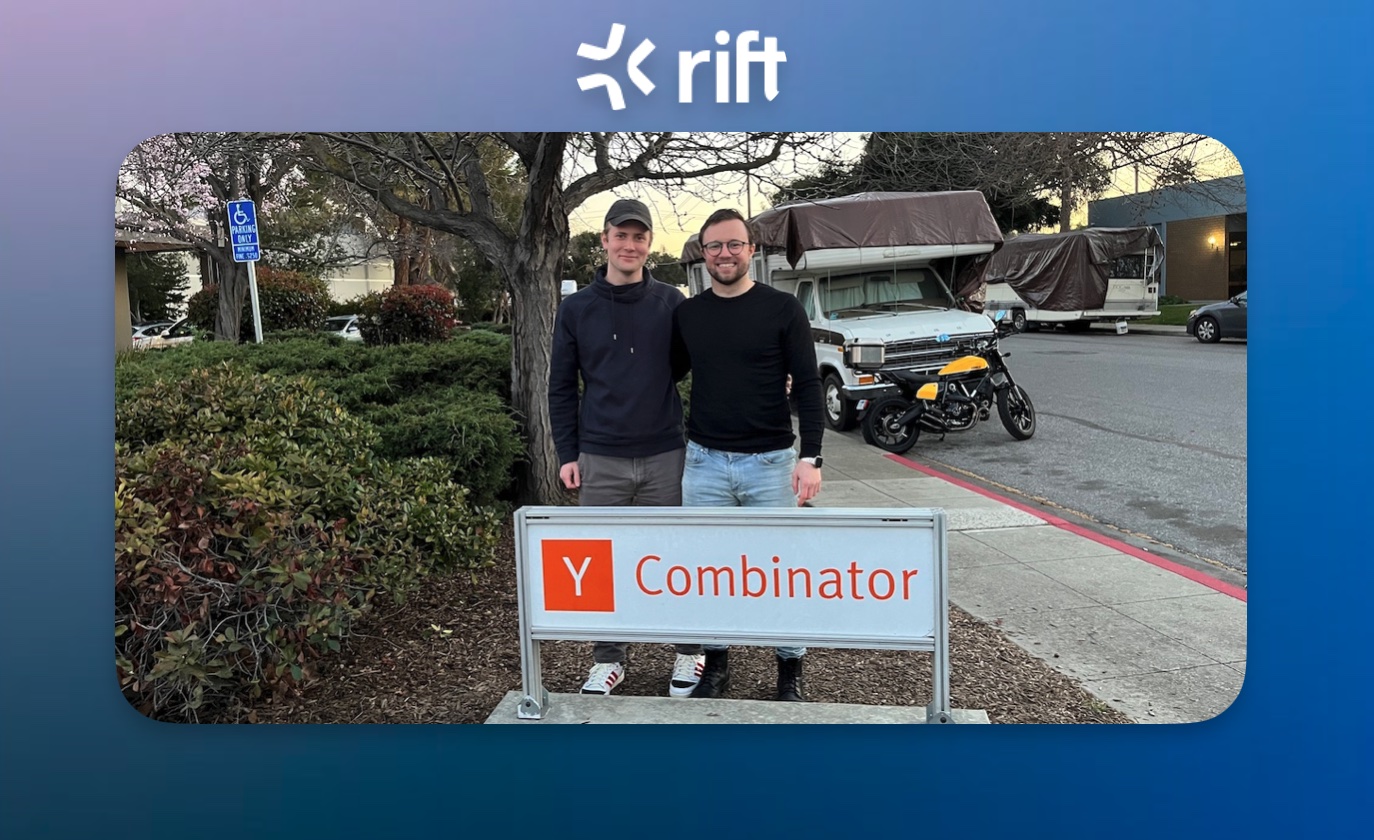
Founders Seth Schilbe and Shardul Bansal met at AWS. Schilbe worked on ECS networking and engineering teams; Bansal worked on high-throughput infrastructure and previously developed evaluations in the Bittensor ecosystem.
They also ran an open-source agent competition, which they say taught them how models exploit weaknesses in an environment. At ORO, the task is to make the reward correspond more closely to the business behavior they want.
The company is post-training an open model using the simulation. That work is ongoing, not a demonstrated solution to autonomous business management. Model builders can use the environment to investigate failures and produce training data. For now, the produce desk offers a concrete question: when the customer starts ordering less, can the agent connect that change to something it did weeks earlier?
Lorem ipsum dolor sit amet, consectetur adipiscing elit. Suspendisse varius enim in eros elementum tristique. Duis cursus, mi quis viverra ornare, eros dolor interdum nulla, ut commodo diam libero vitae erat. Aenean faucibus nibh et justo cursus id rutrum lorem imperdiet. Nunc ut sem vitae risus tristique posuere.

Built for Delaware C-Corps. Trusted by 2,000+ startups.












Copyright © Fondo (BloomJoy, Inc.)