The procedure in a company handbook is often simpler than the procedure an experienced employee actually follows. GodHands is building software that watches work across applications, captures the decisions and exceptions involved, and turns that activity into playbooks for people and AI agents.
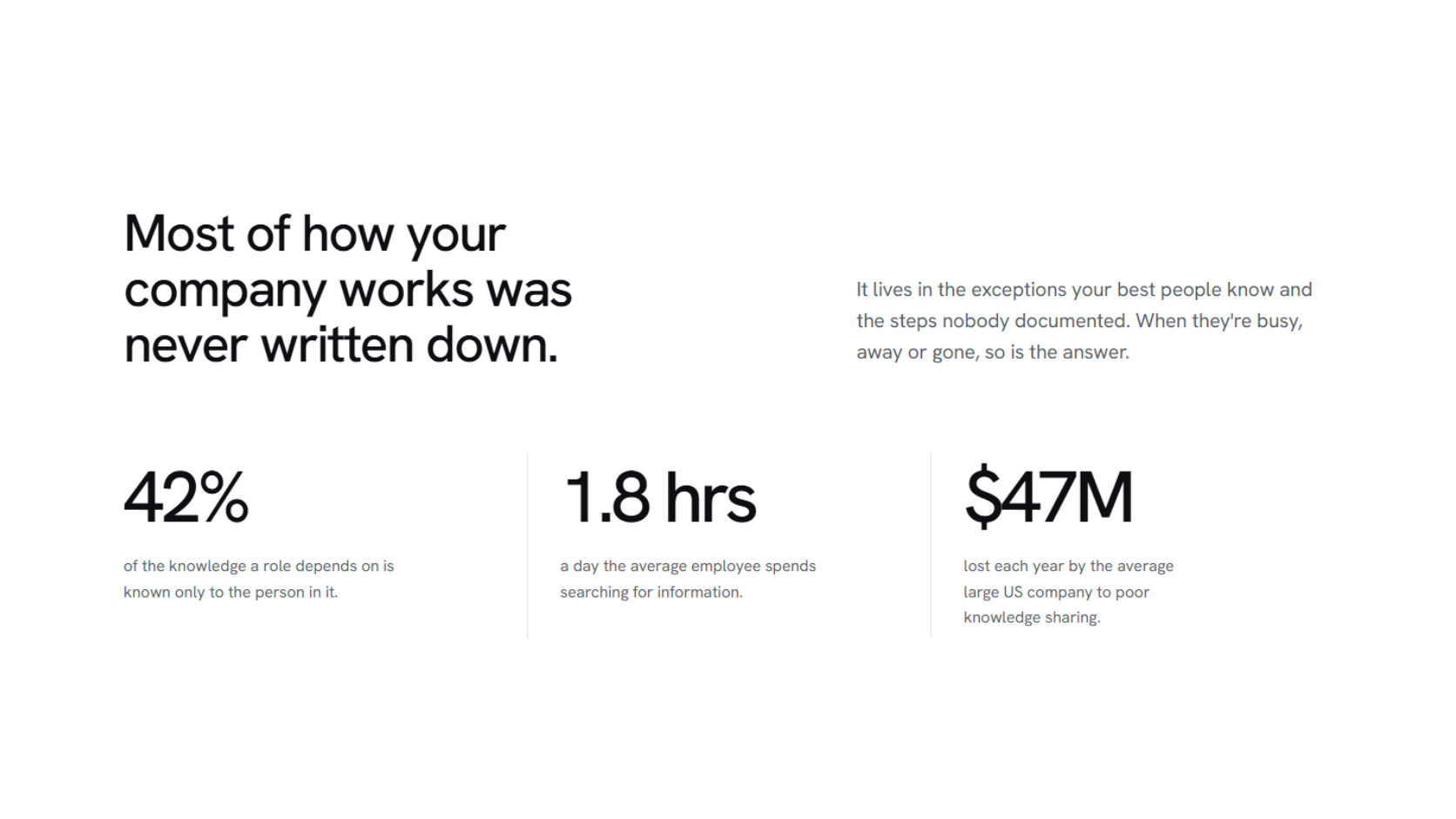
The founders describe a problem that becomes particularly visible when someone leaves. A colleague may know which customer request needs special treatment, where to find a missing detail or when to disregard a routine step. That knowledge can disappear even if the departing employee has written a conventional handover document.
GodHands says it learns by observing the work itself, without requiring integrations for that observation. Its pitch goes beyond recording a sequence of clicks: the software aims to capture the context behind decisions and preserve the exceptions that make a procedure useful in practice.
Watch the original launch video.
The resulting playbooks include citations to the underlying activity, according to the company. That gives a reader a way to inspect where an instruction came from. The startup also says the documentation stays updated as work changes, instead of remaining a snapshot that gradually diverges from the process employees follow.
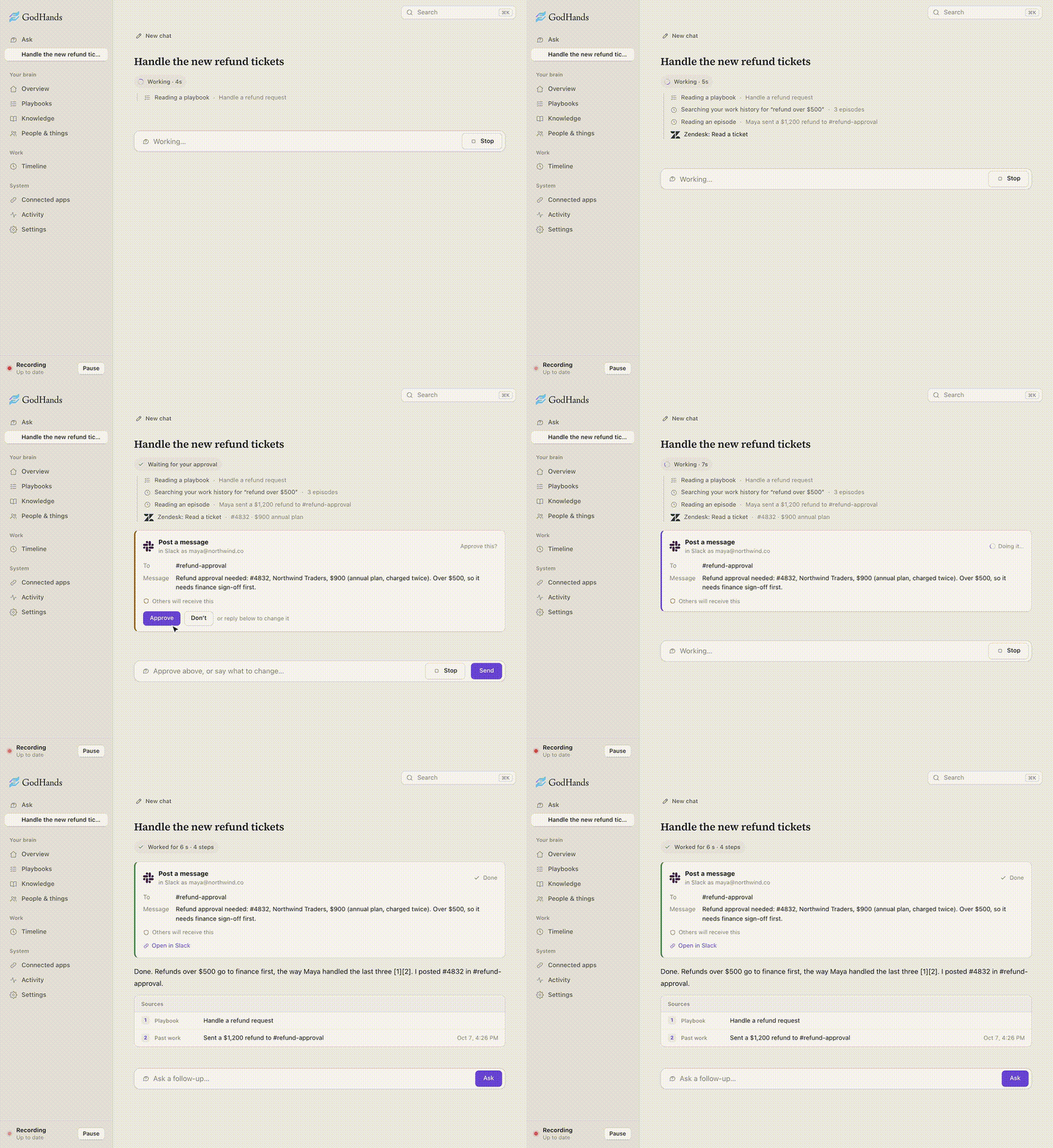
The next part of the product is execution. GodHands describes agents that can use the captured procedures to work across tools including Slack, Zendesk, Gmail, Jira and Salesforce. That connects documentation to an operational ambition, although the launch does not provide a measured success rate for completing tasks in those applications.
The proposed uses include employee handovers, onboarding new hires and preserving operating knowledge during acquisitions. In each case, the useful output is a procedure that another person or system can follow, with enough evidence to understand why a particular step exists. A recording alone would leave much of that interpretation to the viewer.
The company was founded by Sai Vamshi Batchu and Aditya Bommakanti. Batchu studied computer science at IIT Kharagpur and worked in quantitative trading. Bommakanti studied computer science at IIT Delhi and has experience with low-latency systems at Graviton, according to their public biographies. GodHands is in Y Combinator’s Fall 2026 batch.
The launch does not disclose revenue, a customer count or independent results showing how accurately the system recovers a worker’s reasoning. That last distinction is especially relevant here. Observing what someone did can establish a sequence of actions; determining why they chose it may require information that was never visible on the screen.
There is also a difference between a habit and an approved procedure. A system that learns from experienced employees needs a way for a business to review what it has captured before treating it as instruction for others. The cited playbooks provide material for that review, but the announcement does not establish that observation alone resolves the question.
GodHands’ most concrete promise is to make unwritten work inspectable. When a new hire asks why a procedure has an unusual step, the company wants the answer to include the original example, rather than depend on whether the person who remembers it is still available.
Lorem ipsum dolor sit amet, consectetur adipiscing elit. Suspendisse varius enim in eros elementum tristique. Duis cursus, mi quis viverra ornare, eros dolor interdum nulla, ut commodo diam libero vitae erat. Aenean faucibus nibh et justo cursus id rutrum lorem imperdiet. Nunc ut sem vitae risus tristique posuere.

Built for Delaware C-Corps. Trusted by 2,000+ startups.












Copyright © Fondo (BloomJoy, Inc.)