Terse has released Durable Actors, an open-source system for applications where multiple AI agents need to share information without tripping over each other's updates. Each actor is a small server with its own database, processing one request at a time.
The YC Fall 2026 startup positions the project as an alternative to Cloudflare's Durable Objects. Its website offers both managed hosting and a self-hosted runtime, with an MIT license and a Helm chart for deploying the software on a team's own infrastructure.
The problem is familiar to developers of concurrent systems. Two workers can read the same state, independently decide what to do and then produce conflicting updates or duplicate work. Giving agents more tools doesn't remove that coordination problem. It can make it more visible as several agents work on the same record or project.
Co-founder Thomas Elias Karatzas describes encountering it while trying to have ten agents process a large CSV. His setup stored a shared variable in Postgres, but some agents received stale data and repeated work. That experience helped lead him toward the actor model.
Durable Actors gives each actor its own SQLite database and WebSocket server. According to Terse, inactive actors become dormant and back up to S3. The design is intended to reduce the amount of continuously running infrastructure and relieve pressure on a central database and shared WebSocket service.
Watch the original application demonstration.
There is a concrete division of responsibility here. An application can assign state to an actor and send requests to it, instead of spreading the coordination logic across a conventional API and database. Processing one request at a time gives that actor a defined sequence of changes. It doesn't mean every distributed-systems problem elsewhere in the application disappears.
Terse describes chat products, collaborative applications and groups of agents as possible uses. Its launch includes a demonstration of an application-building workflow and a separate whiteboard explanation of the architecture. The source repository gives developers a way to examine the implementation directly.
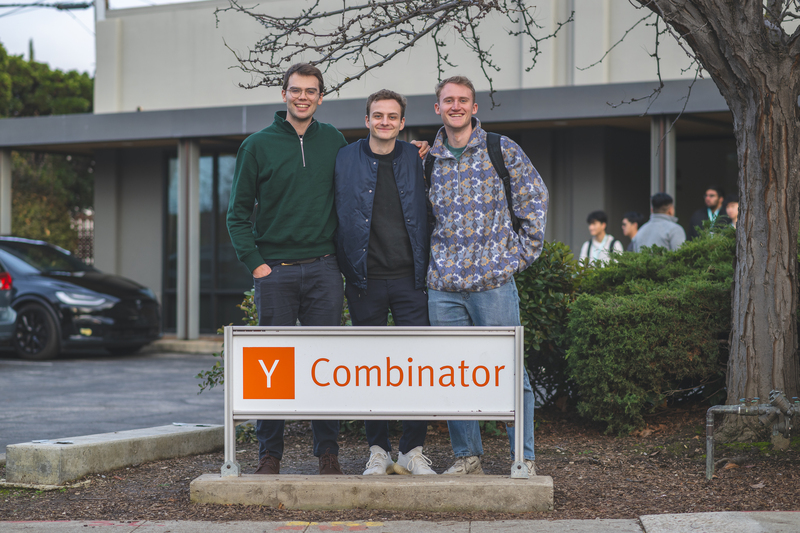
Karatzas spent seven years at Apple, working on the platforms behind Siri and Apple Intelligence. His co-founder, Olivier Simard-Morissette, previously worked at Squarespace and The New York Times and was a principal engineer at Pigeon. The two met at McGill University and have built projects together since.
The launch makes a cost-efficiency argument but doesn't provide a benchmark or a quantified comparison of hosting bills. Actual savings will depend on workload, activity patterns and the infrastructure a team would otherwise run. Likewise, an open-source alternative still requires developers to assess its behavior under their own failure and scaling conditions.
For Terse, the practical opening is a choice developers can make today: use its managed service or run the actor runtime themselves. Its first product turns a broad claim about agent infrastructure into a specific building block, one persistent actor at a time.
Lorem ipsum dolor sit amet, consectetur adipiscing elit. Suspendisse varius enim in eros elementum tristique. Duis cursus, mi quis viverra ornare, eros dolor interdum nulla, ut commodo diam libero vitae erat. Aenean faucibus nibh et justo cursus id rutrum lorem imperdiet. Nunc ut sem vitae risus tristique posuere.

Built for Delaware C-Corps. Trusted by 2,000+ startups.












Copyright © Fondo (BloomJoy, Inc.)