.png)
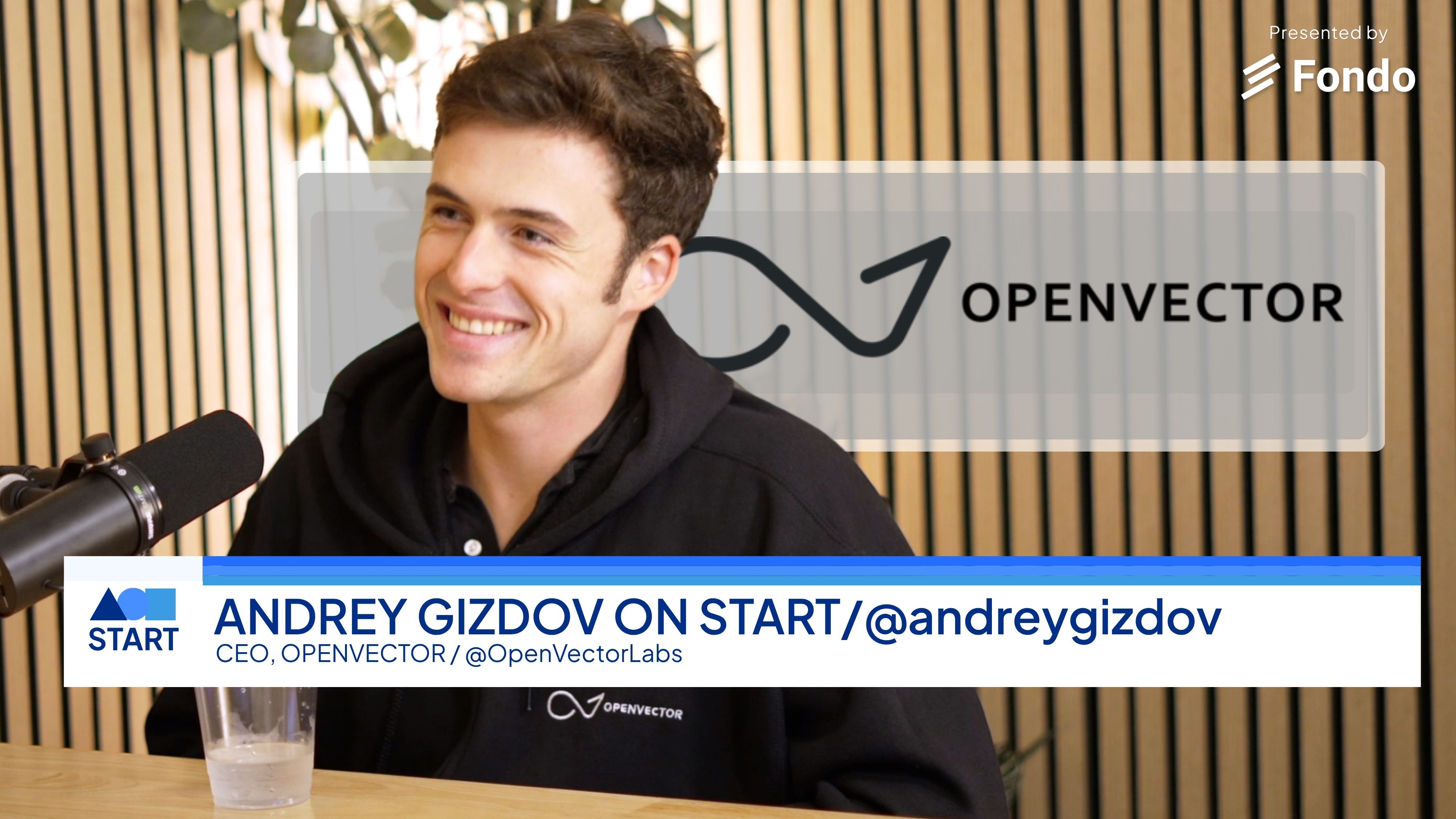
There are over a billion cameras in the world. They can all see. Almost none of them can tell you what they saw.
Andrey Gizdov has been in computer vision since 2016, when CNNs were all the rage, researching real-time vision models.
He met his co-founder Vishal Urlam at a hackathon. His co-founder had deployed cameras and IoT devices across India's power grid to monitor it.
Then they went to conferences on cameras and intelligence and found the state of affairs grim.
From that point, they knew this was a company that was going to exist.
OpenVector connects what cameras see to what businesses do.
Connect an existing camera and describe a workflow in plain English:
Track a misplaced item.
Check that an SOP was followed.
Detect an unscanned item.
Turn an empty shelf into a restocking task.
When something needs attention, OpenVector can take the next step inside the software a business already uses - creating records, sending requests, updating tasks, or notifying someone to act.
Vision → Language → Action.
Doing that without replacing the existing camera infrastructure is the hard part.
Historically, bandwidth and compute pushed vision systems onto on-prem hardware. And ripping out a customer's existing setup doesn't scale.
Andrey says OpenVector has significantly reduced those requirements with almost no loss in accuracy. Today, the company describes its underlying technology as the world's fastest and lowest-bandwidth VLM engine.
During YC, they sold to major companies, including some of the biggest gas-station operators in the country.
The larger bet is that AI is moving out of the chat window and into the physical world.
OpenVector is building the layer between what a camera sees and what a business does next.
🎙️Andrey Gizdov, CEO & Co-Founder, OpenVector on Fondo START
01:39 Harvard and the path into computer vision
02:42 Vision, language, action systems
03:08 Typed commands into camera workflows
03:17 Warehouse and subway use cases
05:15 Why build it now
05:35 Meeting his co-founder
06:02 The camera conference
06:19 Getting into YC, second try
06:38 How they got the domain
07:45 Biggest YC lesson: sales
08:05 Client ROI and talking price
09:23 Why nobody solved this sooner
10:25 Cutting bandwidth and compute
11:22 Foundation models for vision
11:42 AI moving to the physical world
Check out openvector.com
Lorem ipsum dolor sit amet, consectetur adipiscing elit. Suspendisse varius enim in eros elementum tristique. Duis cursus, mi quis viverra ornare, eros dolor interdum nulla, ut commodo diam libero vitae erat. Aenean faucibus nibh et justo cursus id rutrum lorem imperdiet. Nunc ut sem vitae risus tristique posuere.

Built for Delaware C-Corps. Trusted by 2,000+ startups.












Copyright © Fondo (BloomJoy, Inc.)