A customer interrupts, changes their request and leaves out a crucial detail. For Perit.AI, that is useful training material. The startup supplies AI labs with specialized datasets and environments where models encounter the untidy behavior of real people, including voice conversations that refuse to follow a script.
Perit's live speech environments use trained operators who act like customers across ten sectors. They talk over models, offer incomplete information and introduce noisy connections. The company measures whether a model completes the task, how quickly it responds and whether it recovers from interruptions or repairs missing information. When an interaction fails, the lab receives the audio and annotations alongside the result.
That feedback is the central product idea. A score can identify a weak model, but a recording of the failed exchange can show what went wrong. Perit also collects and annotates audio, video, images and code, including first-person video, hand-pose data and depth information. Its launch says recordings come from real participants using its devices, with consent attached to each file.
Watch Perit's original launch video
For coding models, the company builds tasks that run inside controlled software environments. An agent might work in a repository, terminal, browser or interface, with hidden tests and reference outputs determining whether it succeeded. Perit says it includes adversarial cases intended to catch solutions that look convincing but do not meet the requirements, and returns failed runs and traces to the customer.
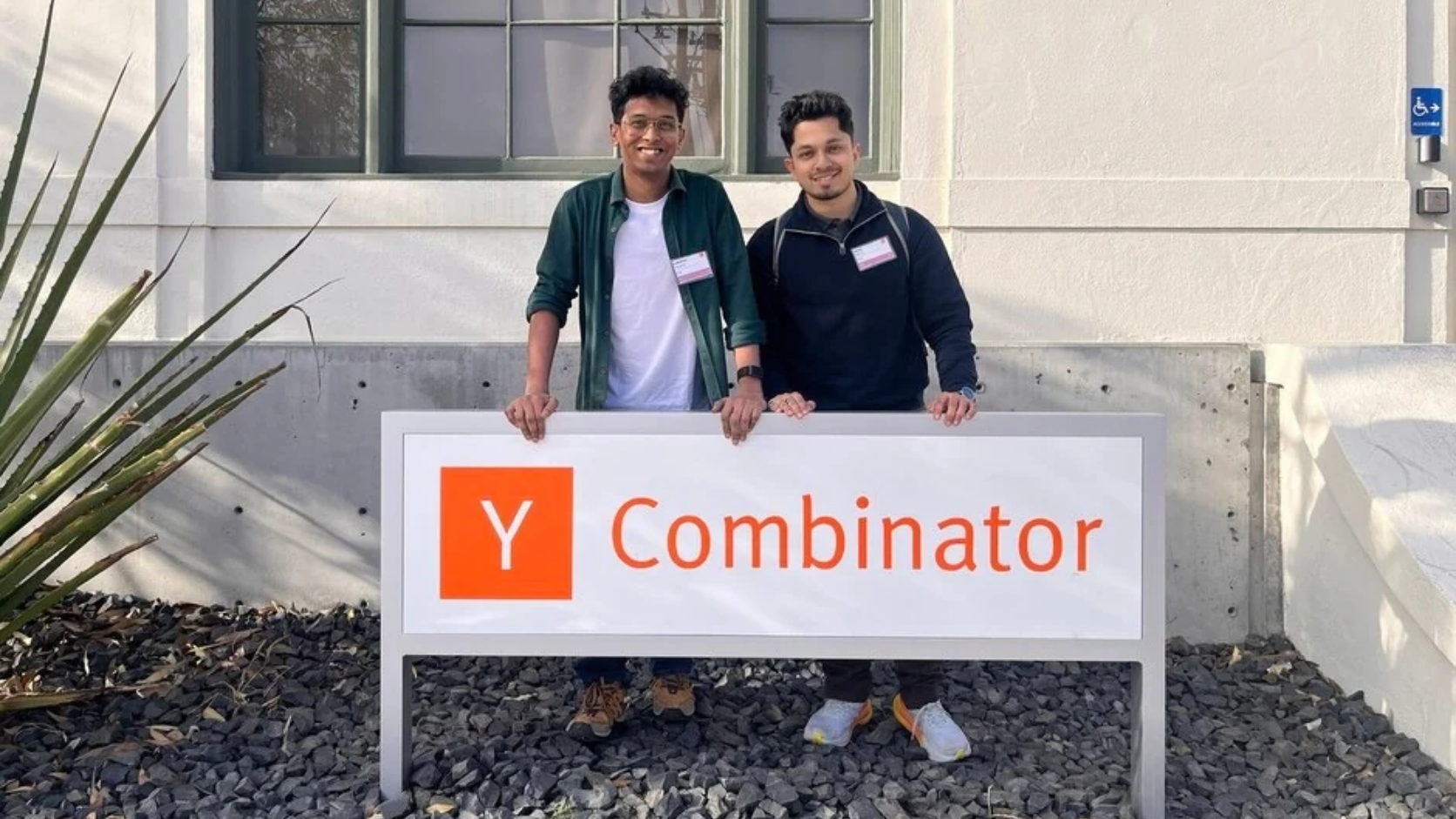
The Fall 2026 Y Combinator company was founded by Kshitij Dixit and Poorva Dixit, both IIT Kharagpur alumni whom the launch describes as second-time YC founders. Kshitij previously built Zeo Route Planner. Poorva, Perit's cofounder and CTO, previously worked on models at Google, systems at Atlassian and map-quality systems at Uber, according to the founders' account.
Their proposition depends on organizing people as much as software. The launch describes a network of more than 16,000 trained experts across more than 12 locales. On its website, Perit says contributors are recruited for a particular sector or locale, tested against project-specific calibration material and reviewed against shared reference data. A person's familiarity with the work becomes part of how a dataset is produced and judged.
Perit reports delivering more than 6,000 hours of speech data across nine locales, more than 10,000 hours of first-person video and hundreds of reinforcement-learning tasks within four months of launch. Those are company-reported figures. Its homepage separately displays more than 4,000 hours of delivered audio; the public materials reviewed do not reconcile that difference. The launch also describes multimillion-dollar contracts without identifying the labs or establishing recognized revenue.
The customer workflow starts with a failure example rather than a generic dataset order. Perit's site asks buyers to describe an input their model gets wrong, then says it scopes the collection conditions, annotation depth and delivery terms. A pilot batch precedes larger deliveries, accompanied by a quality report. That process gives a lab a chance to discover whether it specified the right problem before committing to the full collection.
The practical test is whether those targeted examples and environments improve performance beyond the evaluation itself. Perit's announcement does not establish a universal improvement rate. What it offers is a way to capture the failed interruption, mistaken answer or incorrect code path in enough detail for a lab to investigate and train against it.
Lorem ipsum dolor sit amet, consectetur adipiscing elit. Suspendisse varius enim in eros elementum tristique. Duis cursus, mi quis viverra ornare, eros dolor interdum nulla, ut commodo diam libero vitae erat. Aenean faucibus nibh et justo cursus id rutrum lorem imperdiet. Nunc ut sem vitae risus tristique posuere.

Built for Delaware C-Corps. Trusted by 2,000+ startups.












Copyright © Fondo (BloomJoy, Inc.)