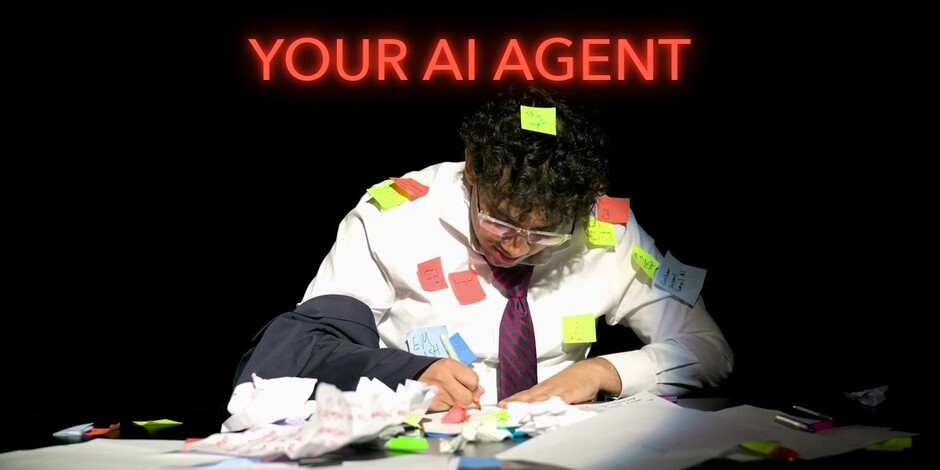
Mirrors is tackling a familiar consequence of putting AI agents into production: every failure becomes another instruction in an increasingly unwieldy prompt. Its software lets developers turn recurring errors into corrections that appear only when a particular situation calls for them.
The startup, part of Y Combinator's Fall 2026 batch, launched a system for finding repeated mistakes, previewing a proposed correction against past conversations and measuring what changes after it goes live. The objective is more specific than making an agent broadly smarter. Mirrors wants teams to maintain the rules governing an agent without continually rewriting its entire instruction set.
Consider a support agent that keeps asking a customer to repeat troubleshooting steps. A developer can write a correction telling it to check what the customer already tried, then define the accounts and workflows where that instruction belongs. Mirrors shows which previous conversations would have received it before the team activates it.
Once the correction is running, developers can compare outcomes with and without it. That feedback matters because adding an instruction isn't the same as fixing a behavior. A rule can reach the wrong conversations, interfere with another instruction or simply fail to change the result.
Watch the original launch demonstration.
Mirrors' account of one design partner makes that distinction concrete. An agent accumulated 75 errors while editing a single travel guide, the company says, despite having an instruction to stop repeated four times in its prompt. The founders describe the incident as evidence that the timing of an instruction can matter as much as its wording.
The product connects through an SDK. According to Mirrors, it works across agent frameworks while leaving model calls and tools under the application's control. Corrections are maintained in a central place and scoped by developers. Its public company profile distinguishes this from an agent choosing for itself which skill to load.
That design makes Mirrors an additional part of the runtime workflow, rather than only a dashboard for reviewing failures afterward. It also gives teams a narrower unit to change when customer requirements differ. Updating one account's correction needn't require maintaining a separate version of every prompt.
Co-founders Aryan Singhal and Aditya Gupta bring research and application experience to that problem. Singhal, the CEO, previously conducted machine-learning research at UT Austin and UCSB. Gupta, the CTO, has built computer-vision and agent workflows at startups. Their launch describes prior systems serving thousands of sessions each week, but provides no comparable adoption or performance figures for Mirrors itself.
The company is inviting engineering teams to bring a failed agent run for review. The practical question for those teams will be whether a targeted correction produces a measurable improvement on the conversations that matter, without creating another rule they have to troubleshoot later.
Lorem ipsum dolor sit amet, consectetur adipiscing elit. Suspendisse varius enim in eros elementum tristique. Duis cursus, mi quis viverra ornare, eros dolor interdum nulla, ut commodo diam libero vitae erat. Aenean faucibus nibh et justo cursus id rutrum lorem imperdiet. Nunc ut sem vitae risus tristique posuere.

Built for Delaware C-Corps. Trusted by 2,000+ startups.












Copyright © Fondo (BloomJoy, Inc.)