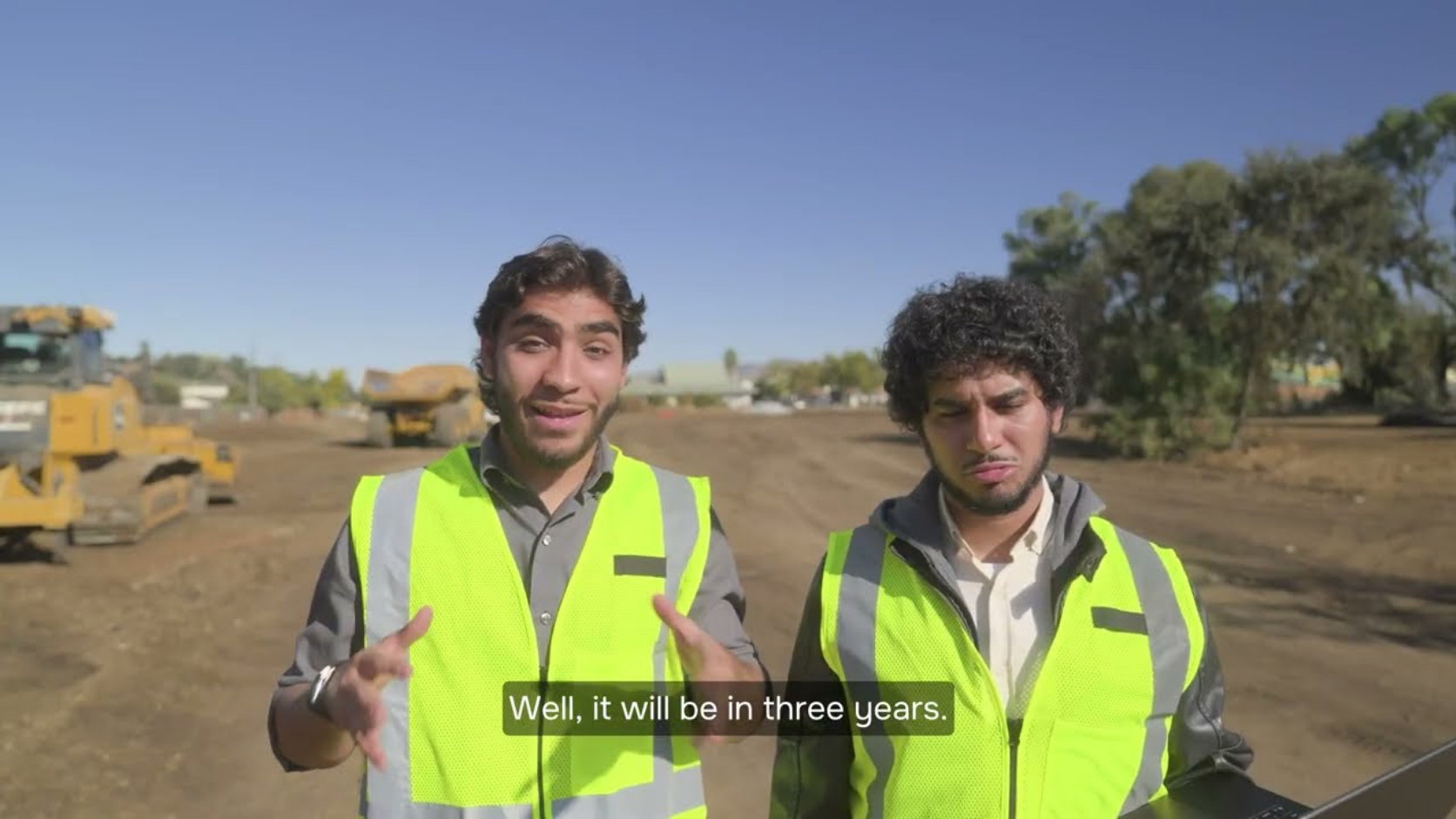
Gradon wants engineers to hand an AI assistant a project assignment and get back drawings, calculations and reports in the software they already use. The less glamorous part of its pitch may be the more consequential one: the firm’s engineers still review the work and approve what leaves the office.
The startup, part of Y Combinator’s Fall 2026 batch, is targeting architecture, engineering and construction firms with an assistant that works across production tasks. Its launch describes a system that takes instructions through chat, voice or screen sharing and follows a firm’s existing standards rather than asking staff to rebuild their process around a new design tool.
That makes the unit of work larger than a single answer in a chatbot. An engineering deliverable can involve a drawing, supporting calculations, written explanations and a coordinated set of files. Gradon’s proposition is to handle those connected steps while leaving professional judgment and sign-off with the people responsible for the project.
The company says its software learns from a firm’s previous projects and established details. That context is intended to make new deliverables consistent with work the team has already produced. Its scope spans civil and structural engineering, mechanical, electrical and plumbing work, and architecture.
Watch Gradon’s launch demonstration.
Gradon’s website names Civil 3D, Revit, ETABS and Bluebeam among the tools it works with. It also says AI-produced output requires review by a licensed professional before delivery. Those qualifications are central to assessing the product: producing a convincing drawing is different from establishing that it is complete, correct and appropriate for a particular site.
The founders describe unusually hands-on onboarding. They visit offices, work individually with engineers and learn where time goes on real projects. The launch also offers office hours and lunch-and-learn sessions. That approach acknowledges a practical obstacle to adopting AI in a specialist firm: a tool needs both access to the right context and users who understand how to supervise it.
Gradon reports that firms using its product have reduced average project time by more than 75%. The announcement does not provide the sample size or an independent benchmark behind that figure. It is a company-reported result, rather than evidence that every project or discipline will see a comparable improvement.
Co-founders Nour Zahzah and Yousef Helal have known each other since kindergarten, according to their launch post. Zahzah studied mechanical engineering at Berkeley and previously worked on an in-store AI shopping assistant startup. Helal’s background includes Berkeley, a Stanford master’s degree and engineering work at Apple and AMD.
The product’s breadth creates a demanding test for that team. A system that moves between calculations, CAD files and reports has to maintain consistency across them, not merely complete each task in isolation. The founders’ decision to spend time inside customer offices puts those workflow details at the center of deployment.
For prospective customers, Gradon’s website offers a paid pilot on a real project. That provides a concrete place to evaluate its larger promise: whether the hours saved in production survive the review that still has to happen before an engineer signs the work.
Lorem ipsum dolor sit amet, consectetur adipiscing elit. Suspendisse varius enim in eros elementum tristique. Duis cursus, mi quis viverra ornare, eros dolor interdum nulla, ut commodo diam libero vitae erat. Aenean faucibus nibh et justo cursus id rutrum lorem imperdiet. Nunc ut sem vitae risus tristique posuere.

Built for Delaware C-Corps. Trusted by 2,000+ startups.












Copyright © Fondo (BloomJoy, Inc.)