Boxes.dev wants developers to stop keeping their laptops open just to keep coding agents alive. The startup gives each Claude Code or Codex agent a separate cloud computer, complete with the development environment it needs to run and test an application.
The product addresses a practical consequence of working with several agents at once. Parallel coding sessions can produce parallel demands on memory, processors, databases and ports. Giving each agent another checkout of the code does not automatically give it the resources to run the application independently.
Founded by Nick Bushak and Drew Regitsky, Boxes.dev moves those environments off the developer’s machine. Its YC launch describes a separate computer for each agent, with access from a desktop app, phone and other work tools. The company belongs to Y Combinator’s Fall 2026 batch.
Setup starts with the coding tools a developer already uses. According to the company’s website, an agent examines the local environment and prepares a migration plan. The developer reviews what will be uploaded before the setup moves into a cloud template. New work then starts from copies of that environment.
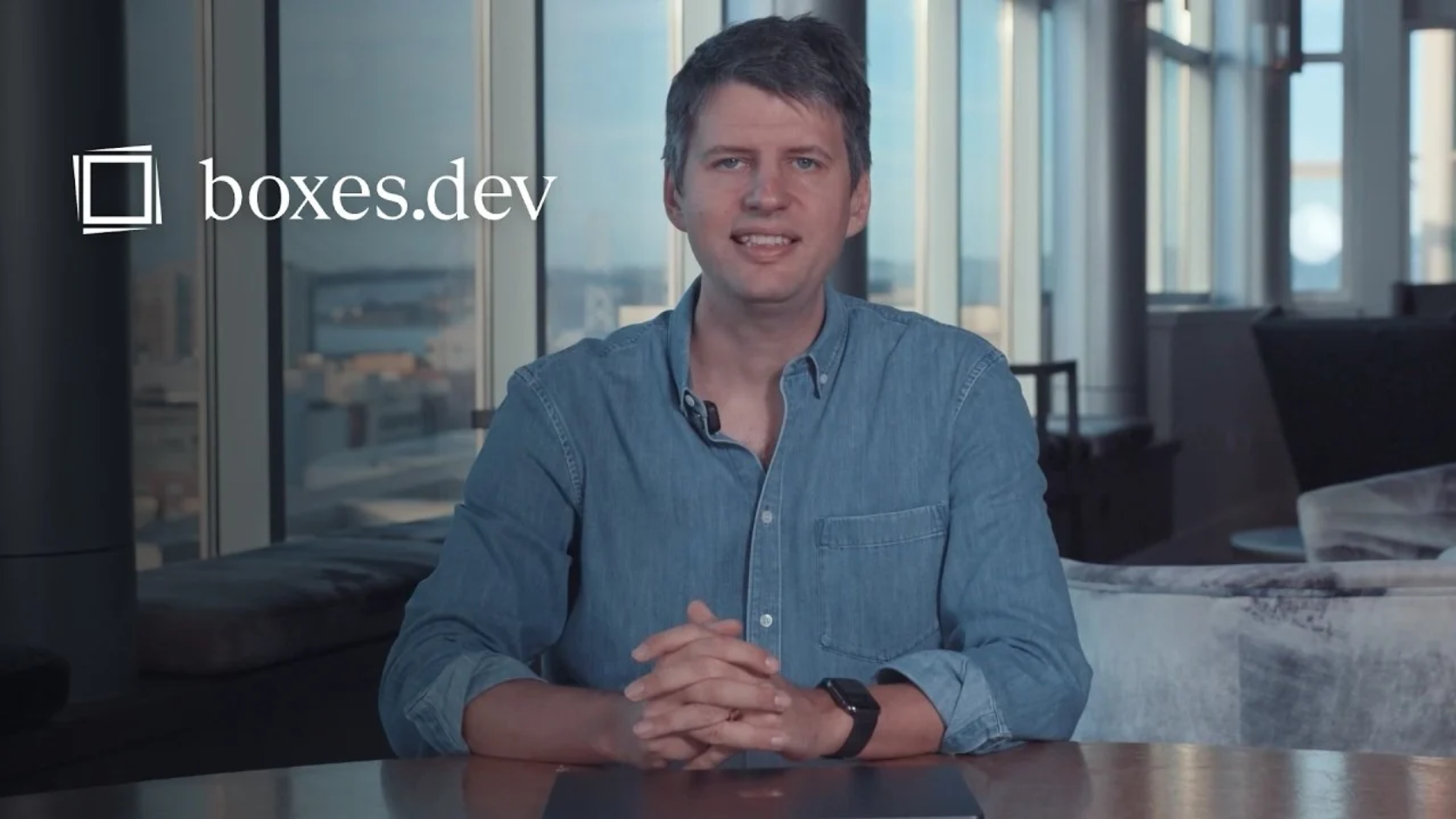
Watch Boxes.dev’s original launch video
Boxes.dev is offering three free months of Pro through its YC launch. The offer ends November 21. Claim the offer at boxes.dev/launch-yc.
The intended payoff is that an agent can do more than edit files. With an application running, it can test changes and return screenshots. Developers can also use port forwarding to inspect the result in their own browser, while the isolated environment keeps one agent’s changes from disrupting another’s work.
Boxes.dev runs the native Claude Code and Codex tools using a customer’s existing subscription or API credentials. It is an independent product, not an offering from Anthropic or OpenAI. That positioning puts its focus on the surrounding workspace rather than selling a replacement coding agent.
The founders have worked together before. Bushak co-founded recruiting software company Gem, where Regitsky was the first employee and later a principal engineer. Their YC profiles also identify both as MIT alumni.
In an earlier Hacker News introduction, the pair described reaching the product through their own coding habits. They had been working extensively with Claude Code and Codex and found local machines increasingly awkward for parallel sessions. They also wanted mobile access to feel like part of the workflow, rather than a way to check a machine left running elsewhere.
The latest launch describes work at a larger scale. Boxes.dev says one customer used more than 200 agents across more than 100 machines on a software project. The customer is unnamed, and the example does not establish a general productivity gain. It does show why coordinating agents can become an infrastructure problem as well as an interface problem.
The website lists connections to Slack and Linear, along with scheduled work and API triggers. Those let a task begin outside the Boxes.dev workspace and return results where it originated. Developers can then pick up the session to review or continue it.
More parallel computers also mean more compute to pay for. Boxes.dev says idle machines sleep automatically and sleeping machines are free, while paid plans include allowances for active machine time. That makes the cost of a busy agent fleet a separate consideration from the model subscription. Closing a laptop stops being the limiting factor; deciding how much work to run at once still matters.
Lorem ipsum dolor sit amet, consectetur adipiscing elit. Suspendisse varius enim in eros elementum tristique. Duis cursus, mi quis viverra ornare, eros dolor interdum nulla, ut commodo diam libero vitae erat. Aenean faucibus nibh et justo cursus id rutrum lorem imperdiet. Nunc ut sem vitae risus tristique posuere.

Built for Delaware C-Corps. Trusted by 2,000+ startups.












Copyright © Fondo (BloomJoy, Inc.)