Axiomat wants an AI assistant to prove that its database query matches the question before allowing the query to run. The startup is applying formal verification to company data, aiming to replace a plausible-looking answer with one whose underlying logic can be checked.
The initial product focuses on structured-data queries. In its launch announcement, Axiomat says it converts a question into a mathematical definition using a company’s business rules, then uses Lean to verify that the proposed query matches that definition. If the proof fails, the agent tries again or reports that it could not find a verified answer.
A second step addresses a less visible problem: the system might correctly execute the wrong interpretation. Before returning an answer, Axiomat says it translates the mathematical definition back into explicit English using conventional code rather than another AI-generated explanation. Users can see the interpretation being checked.
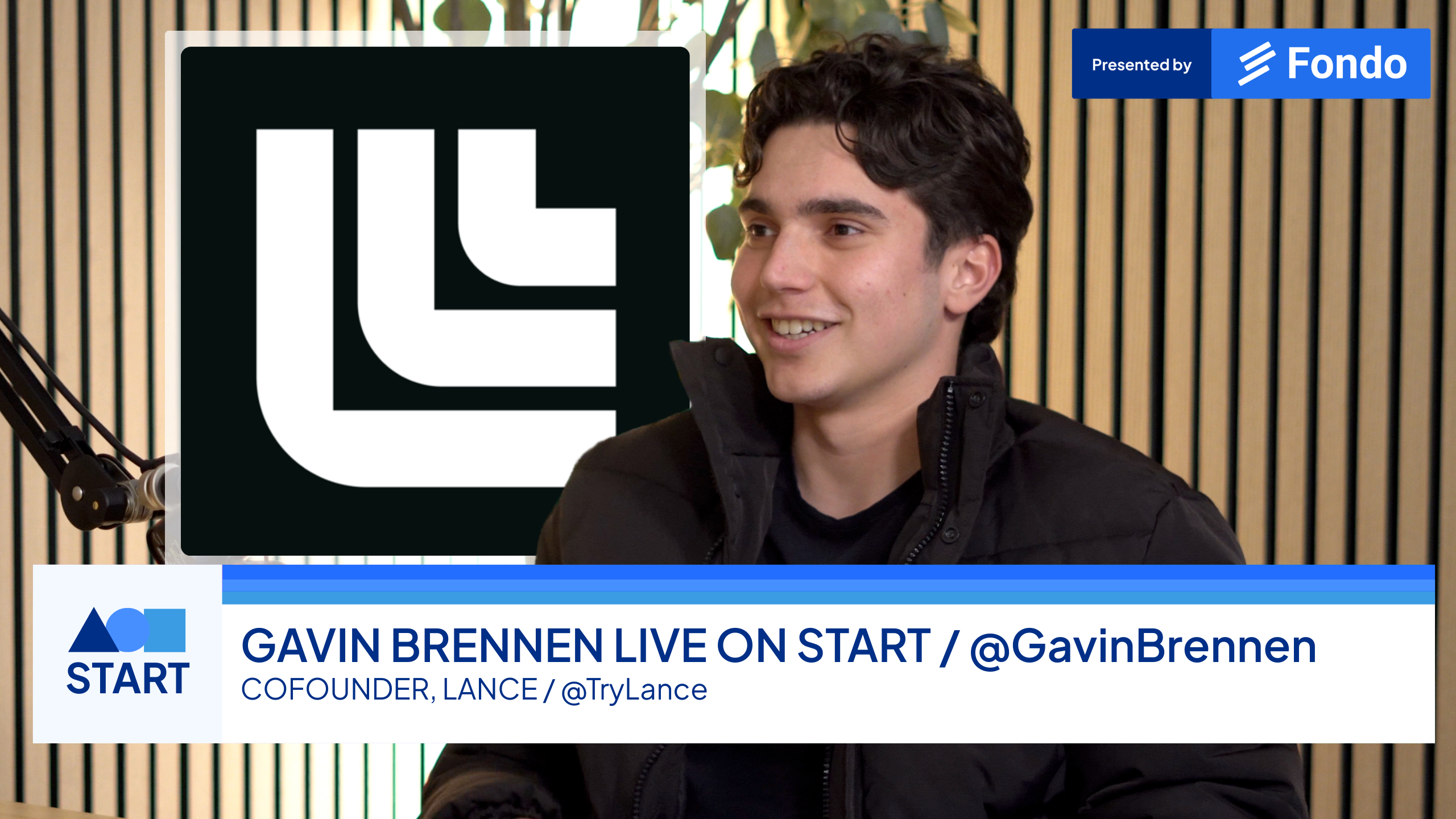
Watch Axiomat’s original launch demonstration.
The distinction is especially relevant to business reporting, where a familiar word can hide several definitions. Axiomat’s website points to customer counts that include trials and revenue counted twice as examples of answers that could mislead a team. Its proposed data layer turns documentation and database schemas into a logical model of the business, while leaving the underlying data where it resides.
Formal verification gives that approach a different foundation from asking a language model to review its own answer. Lean is a programming language and proof assistant: developers can specify a property and construct a proof that software satisfies it. The proof checker evaluates the formal argument rather than estimating how convincing an answer sounds.
That also defines the boundary of the claim. A proof establishes a relationship to a specification and its assumptions. It does not, by itself, establish that a company’s source records are accurate or that its chosen business definitions capture everything a user intended. Axiomat’s English interpretation step makes one of those boundaries visible, but its sweeping claims about eliminating hallucinations should be read in the context of this structured-query product.
The team brings relevant research and engineering backgrounds. CEO Ethan Kharitonov previously worked as an applied scientist at AWS on formal methods and AI verification, according to his public founder profile. He left a doctoral program at Georgia Tech to build the company.
COO Jack Naimer previously conducted AI research at EPFL, including work on DNA foundation models. CTO Elad Perlman developed real-time utility-control software at Survalent. All three studied at the University of Toronto, and Axiomat is in Y Combinator’s Fall 2026 batch.
The company’s public materials invite prospective users to book demonstrations and discuss data-querying use cases. They do not provide customer counts, production-query volumes or published independent performance benchmarks, so the launch offers more detail about the proposed verification method than its deployment scale.
For an AI product team, the immediate question is whether that method can cover the questions its users actually ask, with definitions they can understand and response times they will accept. Axiomat’s most consequential design choice is its refusal path: when the system cannot produce the required proof, the query is supposed to stop rather than proceed on confidence alone.
Lorem ipsum dolor sit amet, consectetur adipiscing elit. Suspendisse varius enim in eros elementum tristique. Duis cursus, mi quis viverra ornare, eros dolor interdum nulla, ut commodo diam libero vitae erat. Aenean faucibus nibh et justo cursus id rutrum lorem imperdiet. Nunc ut sem vitae risus tristique posuere.

Built for Delaware C-Corps. Trusted by 2,000+ startups.












Copyright © Fondo (BloomJoy, Inc.)