.png)
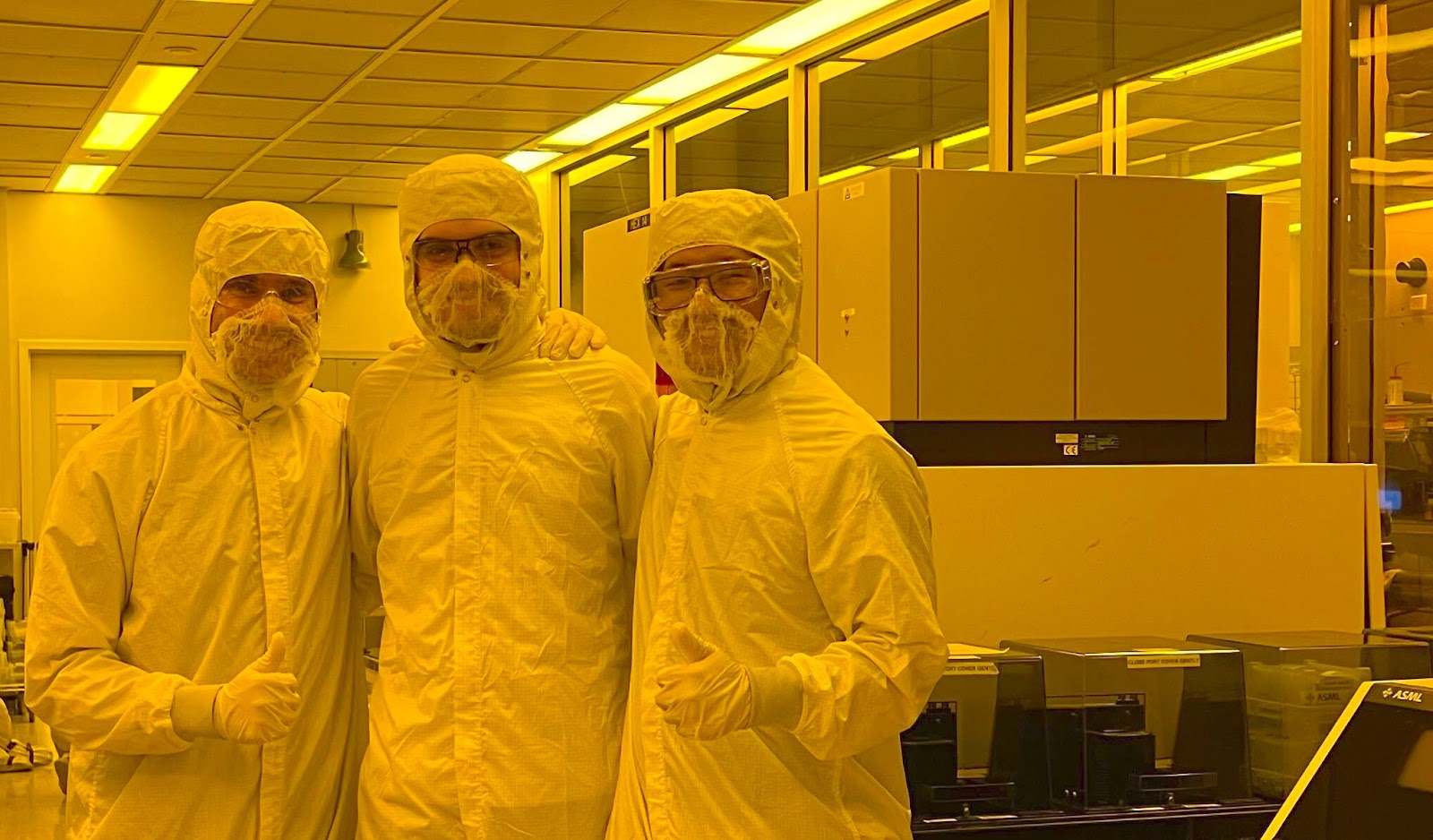
Atum Works recently launched!

https://www.youtube.com/watch?v=0n0Di5sLCjo&feature=youtu.be
Founded by Lucas Pabarcius, Malcolm Tisdale & Matteo Kimura
Atum Works is a team of physicists and systems engineers from Caltech and NASA, where they previously matured multiple nascent technologies, winning NASA’s Most Visionary Concept and Best Product Development awards.
Advisory Board
Dr. Philip Wong: Chief Scientist, TSMC.
Dr. Eli Yablonovitch: Director Emeritus of the NSF Center for Energy Efficient Electronics Science (E3S).
Dr. Julia Greer: Director, Caltech Kavli Nanoscience Institute.
Dr. Michael Hochberg: Silicon Photonics Pioneer.
Dr. Pooya Tadayon: Intel Fellow.
“For the past 50 years, semiconductor-technology development has felt like walking inside a tunnel. The road ahead was clear, as there was a well-defined path. And everyone knew what needed to be done: shrink the transistor. Now, we have reached the end of the tunnel." Philip Wong, Chief Scientist, TSMC, 2024.
Today’s 2D lithography has hit a fundamental wall in feature density, so the semiconductor industry has begun stacking 2D layers to fit more transistors, bits, and bandwidth on each chip.
But stacking scales cost exponentially with density, unlike the constant cost days of Moore: a 10-layer high bandwidth memory (HBM) package is ~5x more expensive than the same amount of un-stacked DRAM.
Using a 3D process to make today's increasingly 3D integrated circuits could shortcut this problem, scaling process complexity with materials rather than layers and enabling the next decade of continued progress.
Atum Works 3D lithography technology can do this: it is capable of fabricating multi-material 3D structures with 100 nm resolution at wafer scale.
Where the ability to create more complex forms enables more complex functions, such granular control of matter enables the future of much more than just chips, including biotech, sensing, and advanced materials.
The Atum Works team recently crossed the cost thresholds that make this technology commercially viable. They are currently in conversation with customers, and will be driving an exponential scaling law in the production capacity of this technology over the coming decade.
Lorem ipsum dolor sit amet, consectetur adipiscing elit. Suspendisse varius enim in eros elementum tristique. Duis cursus, mi quis viverra ornare, eros dolor interdum nulla, ut commodo diam libero vitae erat. Aenean faucibus nibh et justo cursus id rutrum lorem imperdiet. Nunc ut sem vitae risus tristique posuere.

Built for Delaware C-Corps. Trusted by 2,000+ startups.












Copyright © Fondo (BloomJoy, Inc.)