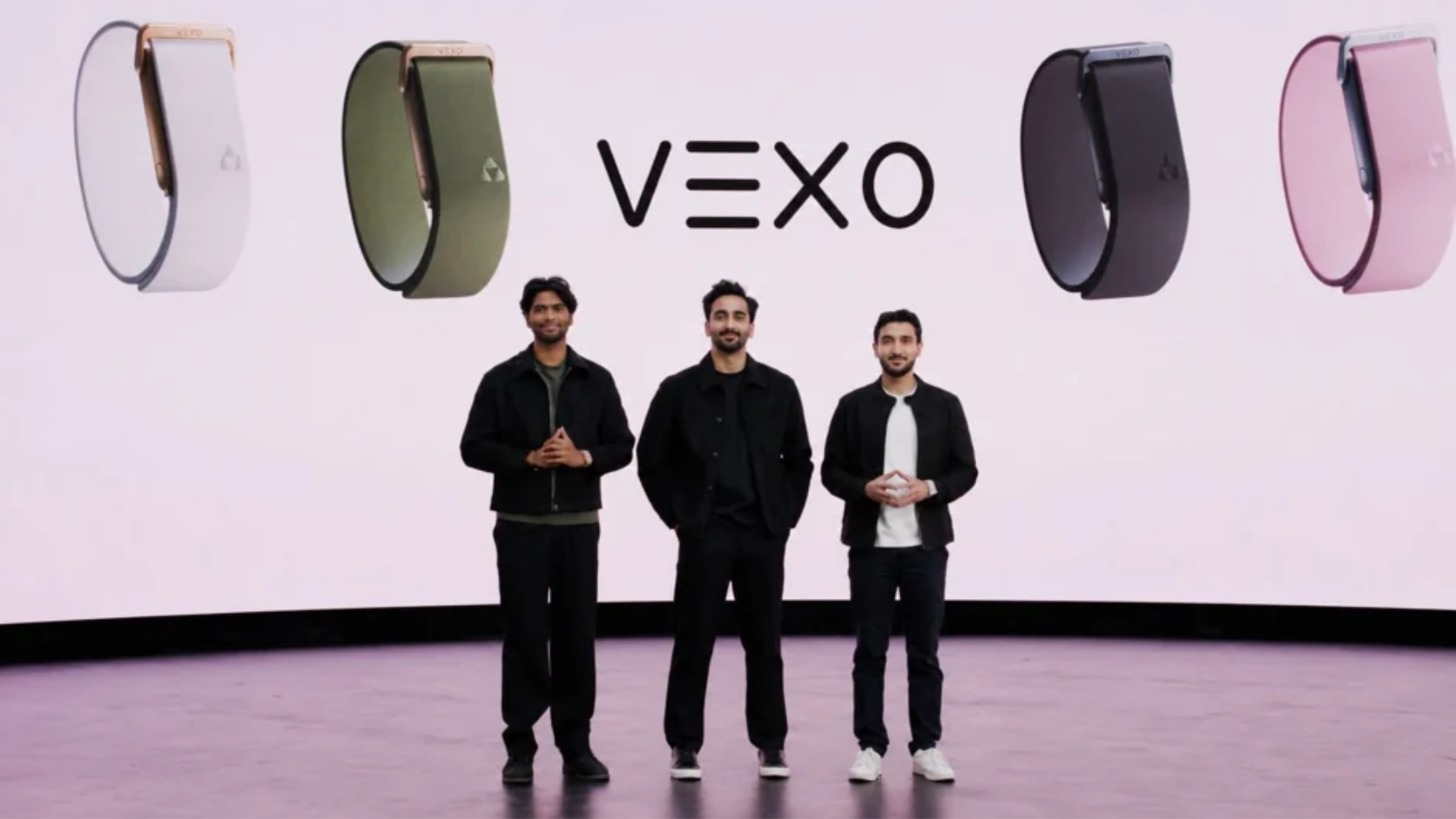

Vexo wants the useful details of a conversation to survive the walk back to a desk. The Fall 2026 Y Combinator company is building a bracelet that records spoken context, retrieves it later and proposes actions based on what was said. It is taking $199 preorders, with its website listing January 30, 2027 as the shipping date.
The distinction the founders emphasize is between a record and a next step. Their examples include recalling someone met at an event, preparing a follow-up email with an agreed price and deadline, and passing relevant context to another AI assistant. Those are company-described capabilities, rather than results from an independent test of shipped hardware.
Vexo says outgoing messages, calendar events and orders require approval. That checkpoint matters for a device whose source material is ordinary speech: discussing a possible plan is not necessarily an instruction to carry it out. The website also describes controls for deciding which actions can happen automatically.
Watch the original Vexo launch video
The hardware is deliberately separate from the screen where many assistants live. Vexo says the bracelet connects over Bluetooth to a phone, which supplies its internet connection. Its advertised battery life is up to four days of continuous use, and the company describes the device as splash- and sweat-resistant rather than waterproof.
A pause button and voice controls let the wearer stop recording, according to the company. The launch also describes deleting recent conversation history by speaking a command. These controls put capture management on the device, although the practical experience of noticing when it is recording and managing interruptions remains untested here.
The privacy architecture deserves more attention than the phrase “always listening” alone provides. Vexo’s public privacy policy says audio travels through the phone to cloud transcription provider AssemblyAI, with possible speaker-separation processing by pyannoteAI. Conversation text can be stored on the phone, synchronized to an account and processed by cloud AI services.
The launch says Vexo does not store audio and encrypts transcripts. That should not be confused with a promise that speech never leaves the phone: the policy explicitly describes outside processing under providers’ retention terms. It also tells users to obtain required consent before recording other people and to stop where recording is prohibited.
That makes this a product for situations where recording is appropriate and participants understand it, not simply a private memory aid whose effects stop at its owner. The people contributing conversation are part of the data flow, even when they are not wearing the bracelet.
Founders Haris Malik, Farqaleet Kiani and Vikram Narra bring backgrounds spanning hardware, firmware and consumer software. Their launch describes work on Tesla energy systems and Optimus, humanoid robotics at K-Scale, and software experience at Amazon and Shopify. The team says it designed the bracelet’s electronics, enclosure, firmware, app and agents.
For now, Vexo’s most concrete proposition is a bridge between conversation and a proposed task, with a person still approving consequential output. Whether that bridge earns a place on someone’s wrist will depend on more than transcription accuracy. Battery life, social acceptability, understandable recording controls and the reliability of proposed actions will all have to hold up outside a launch demonstration.
Lorem ipsum dolor sit amet, consectetur adipiscing elit. Suspendisse varius enim in eros elementum tristique. Duis cursus, mi quis viverra ornare, eros dolor interdum nulla, ut commodo diam libero vitae erat. Aenean faucibus nibh et justo cursus id rutrum lorem imperdiet. Nunc ut sem vitae risus tristique posuere.

Built for Delaware C-Corps. Trusted by 2,000+ startups.












Copyright © Fondo (BloomJoy, Inc.)