The Subvocal Company wants to make dictation usable in the places where talking to a computer feels least appropriate. Its glasses use radio-frequency sensing to detect the small facial movements of silently articulated speech and translate those signals into text.
The startup has opened reservations while it works toward a production device. Founders Aarush Yadav and Arnav Kumar say their prototype can decode open-ended speech at more than 200 words per minute. That is a company-reported result from a small dataset, not a published benchmark across a broad population of users.
The distinction between prototype and finished product is especially important here. The current system uses glasses connected to a semi-portable board. The founders say the hardware shown as the final product on their website represents what they intend to ship. Their next engineering goal is to fit the electronics onto the glasses themselves.
Instead of recording an audible voice, the device sends low-power radio waves through the face and measures how the signal changes as muscles move. A model converts those changes into text. Users still articulate words, either clearly or with movements the company describes as difficult for someone nearby to notice. This is a speech interface, not a claim to read unspoken thoughts.
Watch the original prototype demonstration.
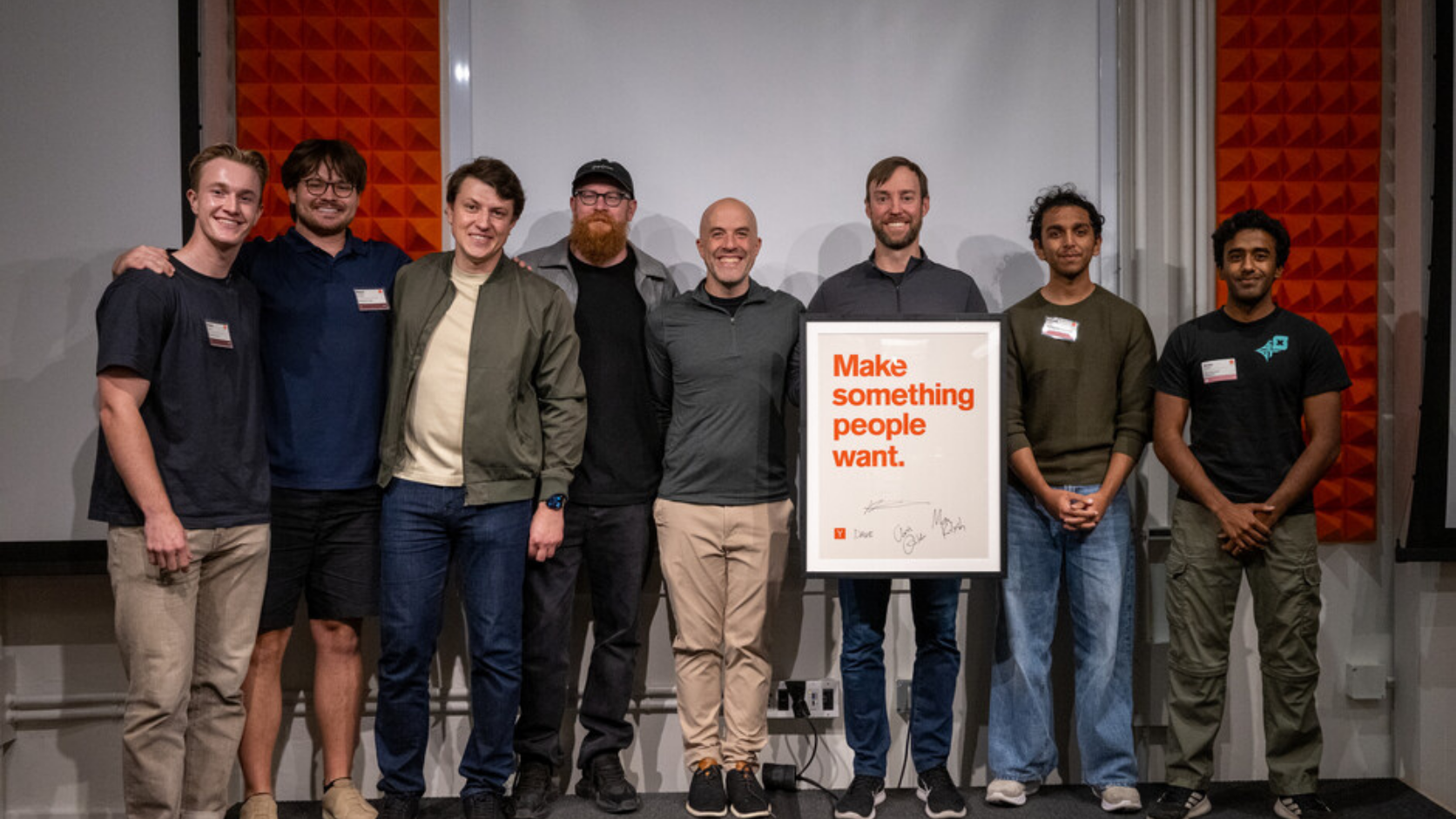
Yadav and Kumar began working on the system roughly four months before the announcement, after building an initial version at a hackathon. They describe moving from a table of electronics and antennas attached to their faces to the current wearable setup. An earlier version won a YC product showcase, according to the launch.
The immediate audience is people who already rely on dictation tools and want to keep using that style of input in an office, on public transit or in a cafe. Prompts, messages and notes are the proposed starting uses. The appeal is straightforward: retain the flow of speaking while reducing the social cost of speaking aloud.
Making that reliable across users remains part of the work ahead. The company plans to collect a larger, population-scale RF dataset and train a model that requires only a short calibration. Its announcement doesn't provide a numerical error rate, independent testing or evidence that the current system generalizes to anyone who puts it on.
Those missing details matter more than the headline typing-speed comparison. A fast input method still needs to recognize different speakers consistently and fit into ordinary work. The founders explicitly frame broad usability and all-day wear as goals for the product, rather than capabilities already established by the prototype.
The YC Fall 2026 company is taking $199 reservations for its first limited batch, with a stated $200 early-bird discount on the final price. That reservation amount should not be confused with the total purchase price. For now, the company is using those commitments to test demand while it prepares the first production run.
Lorem ipsum dolor sit amet, consectetur adipiscing elit. Suspendisse varius enim in eros elementum tristique. Duis cursus, mi quis viverra ornare, eros dolor interdum nulla, ut commodo diam libero vitae erat. Aenean faucibus nibh et justo cursus id rutrum lorem imperdiet. Nunc ut sem vitae risus tristique posuere.

Built for Delaware C-Corps. Trusted by 2,000+ startups.












Copyright © Fondo (BloomJoy, Inc.)