
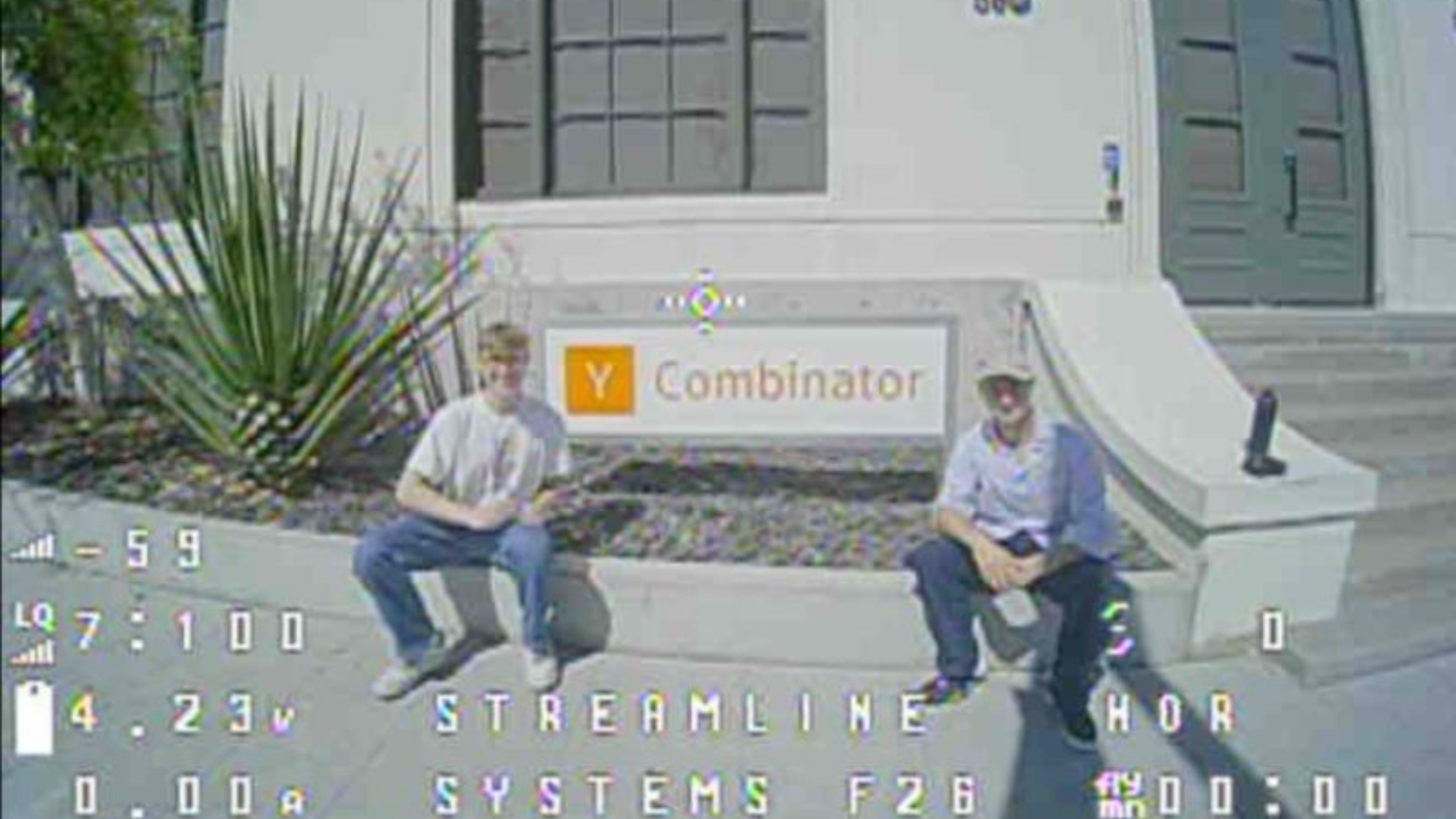
Streamline Systems, a Fall 2026 Y Combinator company, is developing navigation modules for drones operating without GPS. Its November 17 launch focuses on the gap between an inexpensive drone and the cost of giving it a dependable alternative when satellite navigation is unavailable.
The founders describe GPS jamming and spoofing as the problem. Their proposed answer moves positioning into a deployable network, with a low-cost module on each drone. The launch does not disclose the underlying technical architecture, coverage range or measured positioning accuracy.
Streamline says its module works with ArduPilot, PX4 and INAV flight controllers. That integration is an important part of the product's pitch: customers would use the navigation component within existing drone systems rather than adopt an entirely new aircraft platform.
The company frames cost as a central constraint. Its target customers are building low-cost drones in volume, so a navigation alternative needs to fit the economics of the aircraft it supports. Streamline has not published unit pricing in the launch, and affordability should therefore be treated as its positioning rather than a verified comparison across competing products.
Streamline reports that companies competing in the Pentagon's $1.1 billion Drone Dominance Program have placed deposits reserving more than $87,000 worth of modules.
The distinction matters: the launch describes reservations from participating companies, not a direct Pentagon award to Streamline. It also does not establish that all reserved modules have shipped or that the program's overall budget represents revenue available to the startup.
Beyond drones, Streamline says the module could serve as a backup for power grids, telecommunications networks and autonomous delivery. These are proposed additional applications; the launch does not provide separate deployments or customer results for them.
Gabriel Poraj and Charlie Jessett met at Cambridge. Poraj studied Aerospace and Information Engineering before leaving to build Streamline full-time. Jessett graduated third in his year and served as an RAF reservist. Both describe long-standing interests in building and flying hardware.
For prospective customers, the immediate proposition is specific: a positioning module that can connect to familiar flight-controller systems when GPS cannot be relied on. The next evaluation depends on technical and operational details that are not in the launch, including performance, deployment requirements and pricing. Streamline is inviting interested teams to contact the founders for that discussion.
Lorem ipsum dolor sit amet, consectetur adipiscing elit. Suspendisse varius enim in eros elementum tristique. Duis cursus, mi quis viverra ornare, eros dolor interdum nulla, ut commodo diam libero vitae erat. Aenean faucibus nibh et justo cursus id rutrum lorem imperdiet. Nunc ut sem vitae risus tristique posuere.

Built for Delaware C-Corps. Trusted by 2,000+ startups.












Copyright © Fondo (BloomJoy, Inc.)















