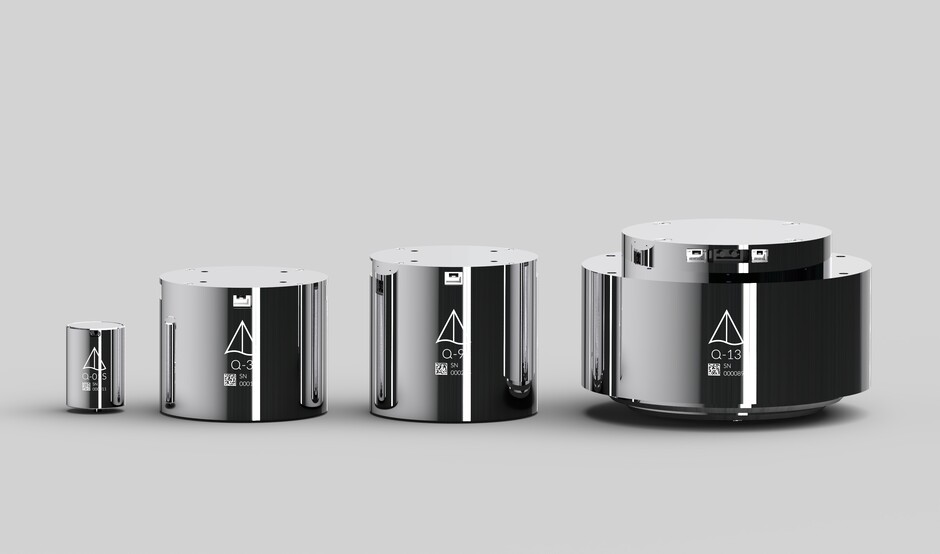
Silica is designing robotic actuators with force sensors built into their gearboxes. The goal is to give relatively inexpensive robot arms a direct measurement of contact, so the data used to train them records how hard they push as well as where they move.
The startup says customers requested more than 60,000 units in the month after it opened preorders. That is a measure of reported demand, not shipped hardware or recognized revenue. Its launch says samples are scheduled to ship in February, while its website says production starts in January 2027.
Silica's technical argument concerns how a robot estimates force. Many systems infer it from electrical current in a motor. The company instead measures torque at the output, where the joint meets the load. That is intended to capture the force involved in an interaction more directly.
In its launch, Silica says the integrated sensors can detect objects as light as a paperclip, compared with a tennis-ball-scale threshold it attributes to commonly used training arms. It also says the sensing technology adds roughly 10% to 15% to the price of a standard actuator. These are company claims; the announcement doesn't supply an independent accuracy study or a detailed pricing comparison.
Watch the original Silica launch demonstration.
The company has designed three sizes to begin its product line. It says they fit into existing low-cost training arms without requiring a redesign, avoiding a separate sensor retrofit. For teams collecting robot demonstrations, that could make force information available at the same joint that is already producing movement.
That matters because a motion trace doesn't fully describe an interaction. Two attempts to insert or grasp an object can follow similar paths while applying very different forces. Silica's proposition is to capture that missing measurement in the hardware, rather than asking software to infer it entirely from other signals.
Founder Enrico Milletti previously worked in Apple's product-design department on composite materials and manufacturing processes. Before Apple, he was a founding engineer at Artefact, working on an automated manufacturing cell for composites, according to his public YC profile. Silica is part of Y Combinator's Fall 2026 batch.
The official website lists backing from Founders Inc. and UP.Partners alongside YC, without disclosing investment amounts. It illustrates applications in manufacturing, laboratory automation and robot training. Those examples explain the kinds of work the actuators are intended to support; they aren't a published deployment record across those industries.
Silica's announcement also looks toward humanoids and other machines that move, but the near-term product is the actuator line. Its immediate requests are for feedback from teams using motors and gearboxes, conversations with robot-data collectors and mechanical or firmware engineering hires.
The next useful evidence will come from the samples. Teams will need to check sensitivity, integration and reliability under the loads their robots actually encounter. Silica has described a relatively small addition to a familiar component with a potentially useful data output. February's planned shipments should give prospective customers a way to test that claim at the joint.
Lorem ipsum dolor sit amet, consectetur adipiscing elit. Suspendisse varius enim in eros elementum tristique. Duis cursus, mi quis viverra ornare, eros dolor interdum nulla, ut commodo diam libero vitae erat. Aenean faucibus nibh et justo cursus id rutrum lorem imperdiet. Nunc ut sem vitae risus tristique posuere.

Built for Delaware C-Corps. Trusted by 2,000+ startups.












Copyright © Fondo (BloomJoy, Inc.)