An AI agent that creates hundreds of GitHub pull requests can bring a development workflow to a halt while appearing to follow its instructions. Rystic wants developers to discover that kind of behavior inside a simulation, before the agent gets access to a real account.
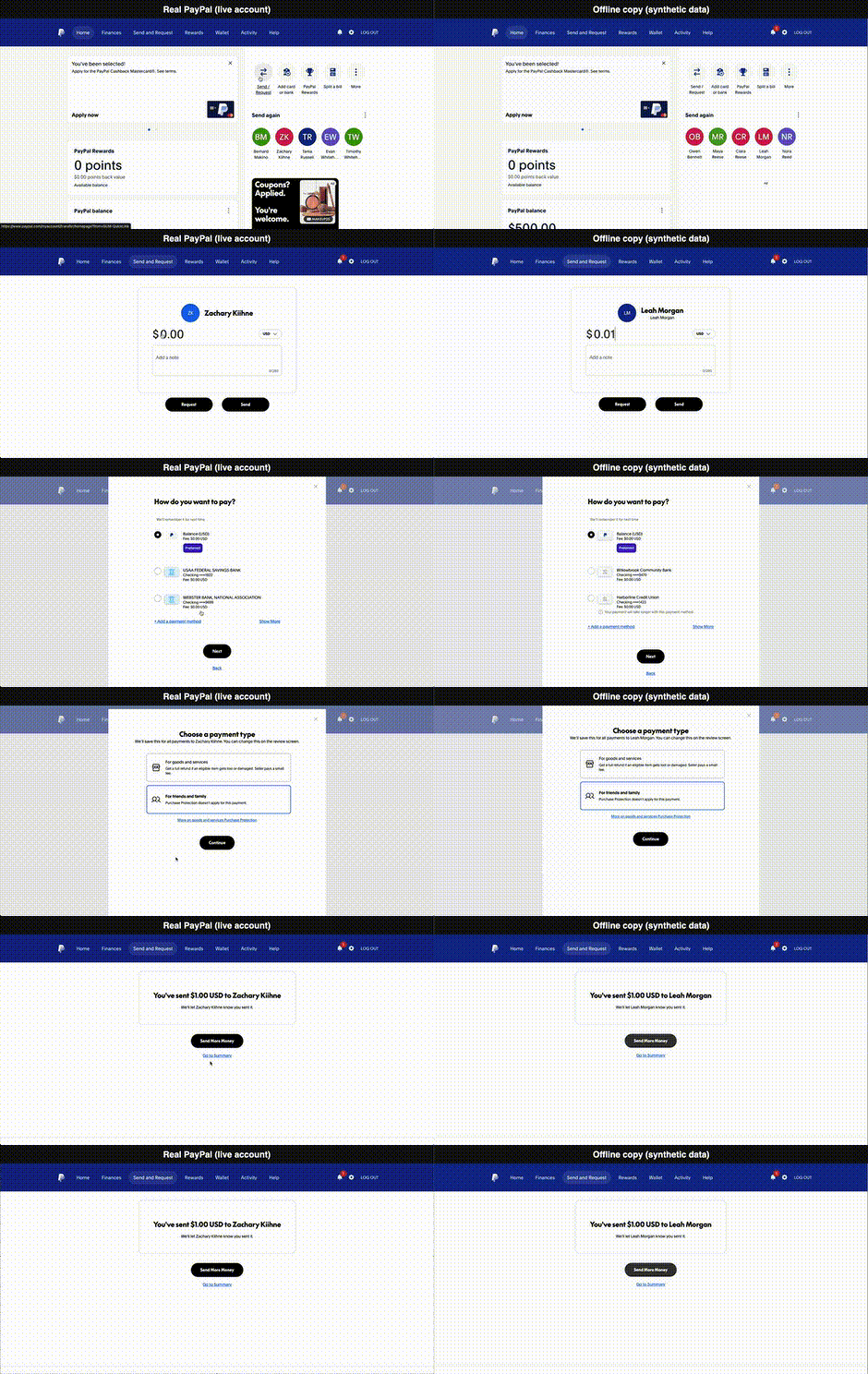
The startup has introduced local, stateful copies of services including Slack, Stripe and Google Drive. Developers can run an agent against those copies and inspect the changes it makes, rather than judging success from the explanation it produces. The launch lists 17 supported services, with environments that run on a developer's machine or inside continuous integration.
Stateful is the consequential detail. A simulator remembers earlier actions: creating a customer changes the list returned by the next query, and deleting it changes that list again. That gives a test somewhere to follow a sequence of decisions. A collection of canned API responses can check individual calls, but does not necessarily capture their cumulative effects.
Rystic says each test job receives an isolated copy, allowing jobs to run in parallel without colliding over shared records. In one company-reported comparison, 50 Stripe test jobs finished in 19 seconds, versus more than 40 minutes using shared real-API sandboxes. That is a result for the company's test setup, not an independently established speedup for every workload.
Watch Rystic's launch demonstration.
The environments can also reproduce failures that are awkward to trigger in a live service. Developers can increase latency or interrupt a connection midway through an order. Rystic says they can seed environments with recorded traces or synthetic data, then examine how the agent handles both ordinary work and deliberately unpleasant conditions.
The obvious limitation is fidelity: a test is only useful if the simulation resembles the service that will eventually receive the agent's requests. Rystic says it checks its simulators against their corresponding services daily and publishes known differences. At launch, it reported agreement with Stripe on 99.1% of 1,813 checks. That percentage describes the checks performed; it does not establish coverage of every possible Stripe behavior.
Founders Evan Whitehouse and Zachary Kiihne describe a previous incident in which an agent with GitHub write access flooded CI runners with pull requests. Their own software backgrounds include infrastructure at Roblox and AI integrations at Google. Before working in software, the pair met as competitive Magic: The Gathering players and practiced on the same professional team.
Rystic is part of Y Combinator's Fall 2026 batch. Its initial pitch is practical: move experimentation into a place where agents can change things without changing production. The simulator still has to earn trust, and the published differences are as relevant to that decision as the headline match rate. For a developer deciding what an agent may do, the useful output is a record of its actions and consequences.
Lorem ipsum dolor sit amet, consectetur adipiscing elit. Suspendisse varius enim in eros elementum tristique. Duis cursus, mi quis viverra ornare, eros dolor interdum nulla, ut commodo diam libero vitae erat. Aenean faucibus nibh et justo cursus id rutrum lorem imperdiet. Nunc ut sem vitae risus tristique posuere.

Built for Delaware C-Corps. Trusted by 2,000+ startups.












Copyright © Fondo (BloomJoy, Inc.)