A hardware team can have a finished product concept and still be months away from a working circuit board. Resin Technologies is offering to take responsibility for that missing piece, from an initial sketch through manufacturing and physical validation.
The Fall 2026 Y Combinator company is not launching a design tool for engineers to operate themselves. It sells an electronics engineering service, with its own AI software supporting the engineers doing the work. Customers provide a specification, a schematic or an existing board; Resin aims to return hardware they can use.
That division of labor is the central product choice. The customer buys a completed board rather than another application to learn or another set of design files to move between suppliers.
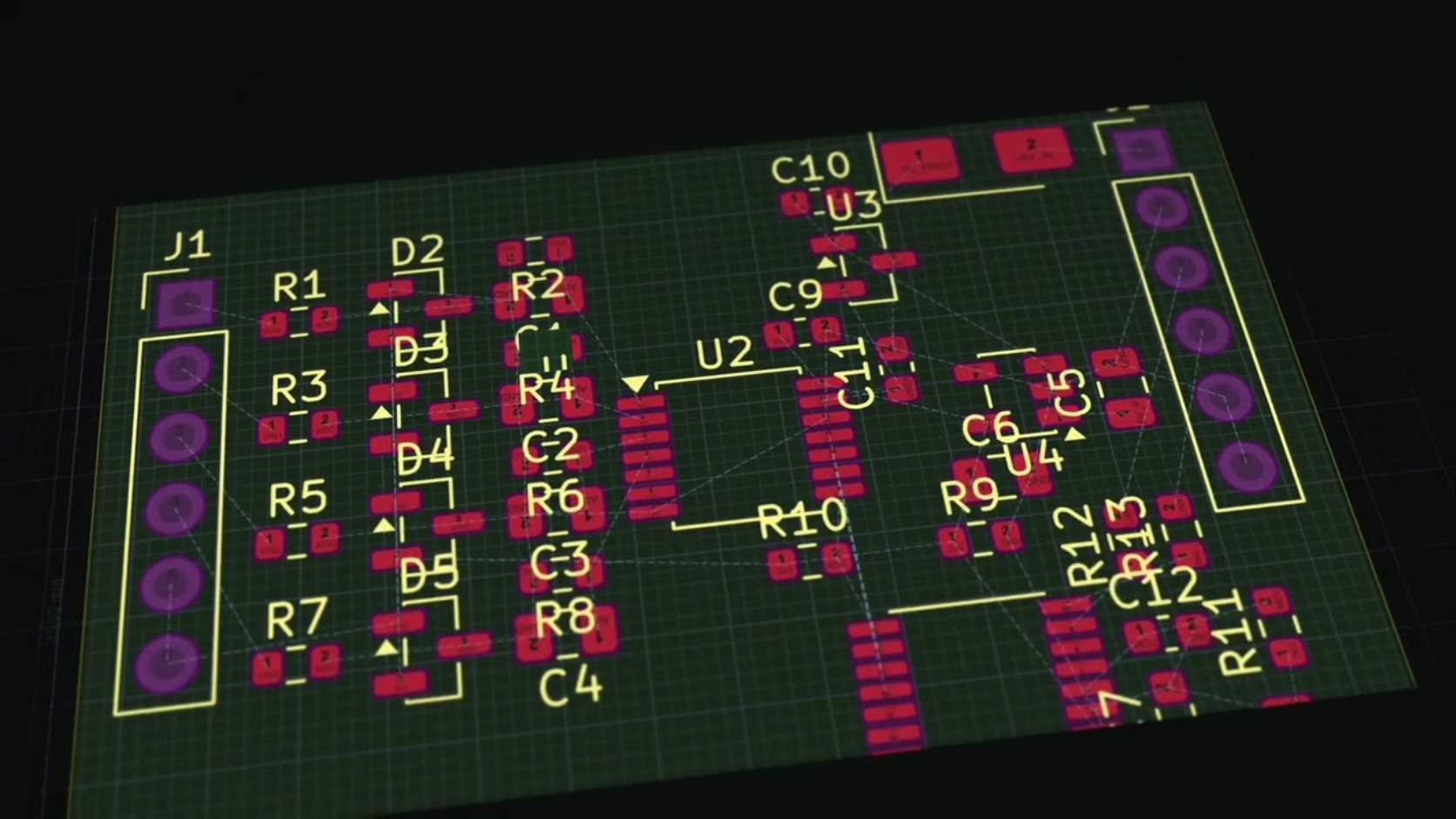
Resin's process starts with understanding the board's requirements. Its engineers use internal tooling to select components, develop the schematic, check for errors and lay out the printed circuit board. The company then handles fabrication and assembly, powers up the result and tests it before delivery.
The launch describes work ranging from simple prototypes to dense multilayer and radio-frequency designs, with applications including wearables and robotics. Resin also takes on existing boards: revising a design, reducing its cost or finding replacements for components that are no longer available.
Those maintenance jobs can be as consequential as a new design. A component substitution is not simply a procurement decision if it changes how the circuit behaves. By including manufacturing and validation in the service, Resin is positioning itself to own more of the consequences of its design decisions.
The company says it reached six figures in annualized revenue two weeks after launching. That is a company-reported run rate, not six figures of revenue necessarily collected during those two weeks. No exact figure or customer count was disclosed.
Its most concrete performance example is a high-density multilayer board it says it shipped in days. According to Resin, comparable work had previously taken that customer months, and the faster delivery helped the customer meet a deadline. The announcement does not identify the customer or provide enough detail to treat the example as a standard delivery commitment for every project.
Resin also describes customers building industrial robots for Apple. That identifies an end market for its customers, not a direct commercial relationship between Apple and Resin.
Founders Anmol Jawandha and Koosha Rezaiezadeh met while studying engineering physics at the University of British Columbia and have been friends for more than a decade. Their backgrounds split across the two sides of the company.
Rezaiezadeh, the CTO, worked on driver-assistance electronics at Bosch, haptics at Intelligent Haptronic Solutions and robotics at A&K Robotics. Jawandha, the CEO, led the forward-deployed engineering team at You.com and worked on machine-learning systems at Borealis AI, alongside earlier startup and robotics experience.
Resin's launch emphasizes catching errors before fabrication, but does not publish an independent defect-rate study or a benchmark of its AI tooling. The proposition customers can evaluate is more tangible: whether the team can deliver a tested board that meets their requirements, on the agreed schedule.
For an initial conversation, Resin asks for a sketch, schematic or description of the problem. The work can begin before a customer has turned that idea into a complete electronics specification.
Lorem ipsum dolor sit amet, consectetur adipiscing elit. Suspendisse varius enim in eros elementum tristique. Duis cursus, mi quis viverra ornare, eros dolor interdum nulla, ut commodo diam libero vitae erat. Aenean faucibus nibh et justo cursus id rutrum lorem imperdiet. Nunc ut sem vitae risus tristique posuere.

Built for Delaware C-Corps. Trusted by 2,000+ startups.












Copyright © Fondo (BloomJoy, Inc.)