.png)


TL;DR: Remy AI is bringing the robotics revolution to the little guy by building AI-powered robots for e-commerce 3PLs.
Founded by Oscar Brisset & Ben Kaye
They been working in this problem space for several years. They met 7 years ago when they were both undergrads at Oxford.
CEO - Oscar Brisset
Previously worked at BCG where he advised C-suites of Fortune 500 logistics companies on $B transformations, including optimising 3PL operations, warehouse automation support, and logistics networks re-designs. AI Engineer previously.
CTO - Ben Kaye
ML PhD from Oxford, specialised in computer vision & robotics. Has a patent pending from his work on the embedded engineering for a medical device now used in 1/3 liver transplants in the US. Last paper recognised as one the best in computer vision last year (Highlight CVPR 2025).

Warehousing to this day remains highly manual. Whether it’s for inbound receiving, picking, or even truck loading, more than 80% of warehouses in the US have little to no automation.
E-commerce 3PLs in particular suffer from this. Unlike large retailers or shippers, their inventory mix and volumes are highly variable, given their smaller size and greater exposure to e-commerce trends. Their contracts renew on an annual basis, their customers regularly go out of business, and the brands they work with frequently release new products.
Most of the automation out there is designed for the big players. Stacker cranes, 2D/3D shuttles, or even more recently AMR-based systems - these all only make sense to invest in above a certain scale and predictability.
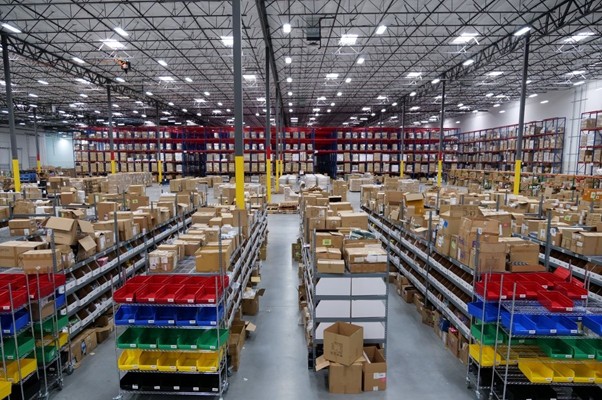
What 80% of 3PLs look like: rows of shelves of plastic totes and cardboard boxes with at best a couple conveyors.
Why is automation so limited? Because existing solutions are expensive ($100-150K incl. solution + installation + servicing), bulky, and inflexible. They’re usually some mechanical system + a PLC that perform one rigid task repetitively with little to no room for customisation beyond some initial configurations. As a result, most 3PLs aren’t able to leverage these and stick to manual options.
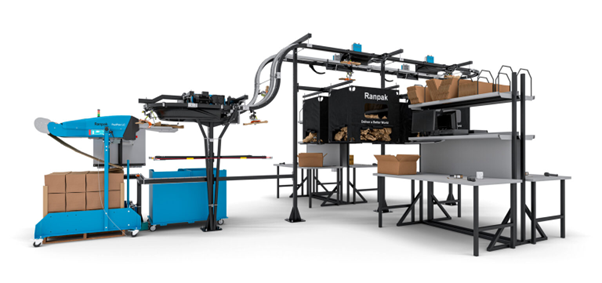
Current automated packing stations: rigid mechanical systems with limited adaptability
Yet this long tail of 3PLs is huge:
Remy AI is building flexible automation for e-commerce 3PLs.
They deploy a robotic system that:
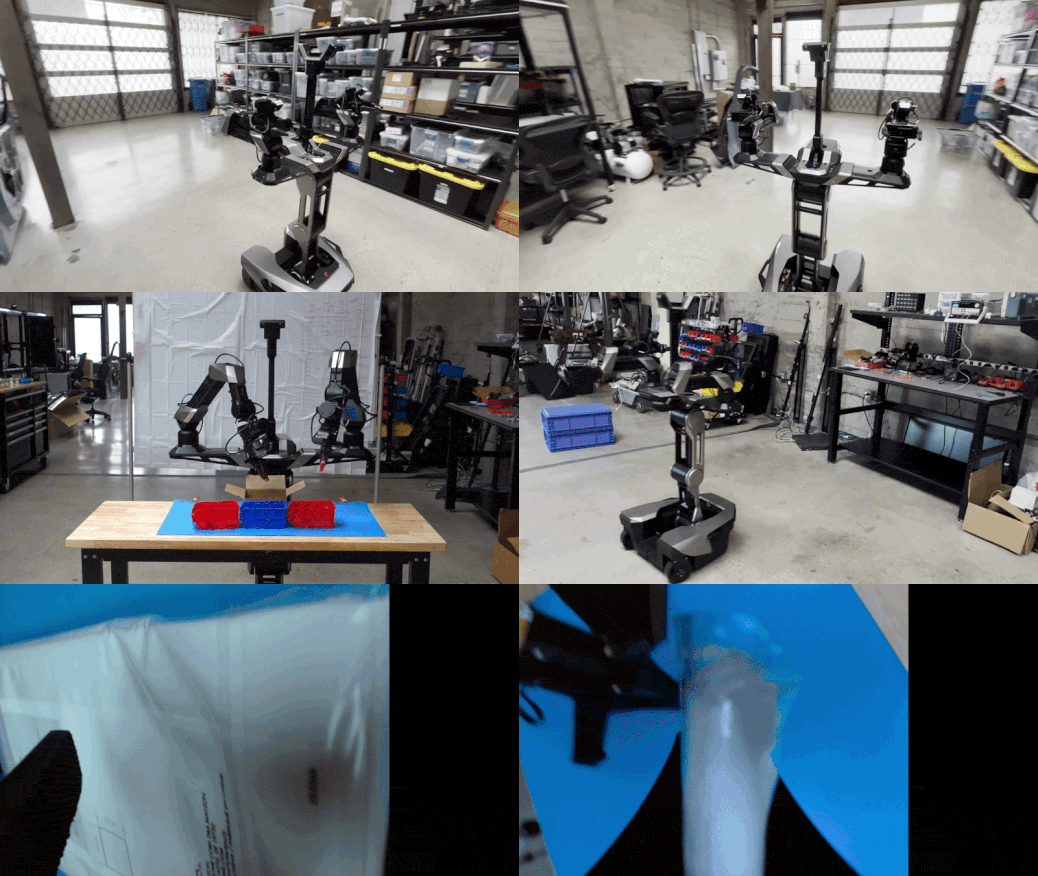
They leverage a versatile bi-manual mobile platform which allows their system to be deployed on a wide range of tasks:
And crucially, They do this at a 50% lower cost than existing solutions, by replacing mechanical complexity with intelligence.
Recent developments in ML & robotics have made it possible to bring a human level of adaptability to robots. Whereas before you’d have to use a deterministic pipeline that would map specific object morphologies to pre-determined grasps, large pre-trained robotics & vision models now enable robots to generate trajectories and grasps by themselves, adapting in real-time to changing environments.
Combined with recent advances in simulation and robot learning, they are able to deploy highly customised systems by taking just a couple photos of the customer’s environment, generating that environment in simulation, to then fine-tune their robot to that specific deployment. Supplementing this with real world data captured at the customer’s site + a rigorous domain randomisation pipeline + their own error recovery algorithms, They areable to deploy systems with production-grade reliability in days not months.
Lorem ipsum dolor sit amet, consectetur adipiscing elit. Suspendisse varius enim in eros elementum tristique. Duis cursus, mi quis viverra ornare, eros dolor interdum nulla, ut commodo diam libero vitae erat. Aenean faucibus nibh et justo cursus id rutrum lorem imperdiet. Nunc ut sem vitae risus tristique posuere.

Built for Delaware C-Corps. Trusted by 2,000+ startups.












Copyright © Fondo (BloomJoy, Inc.)