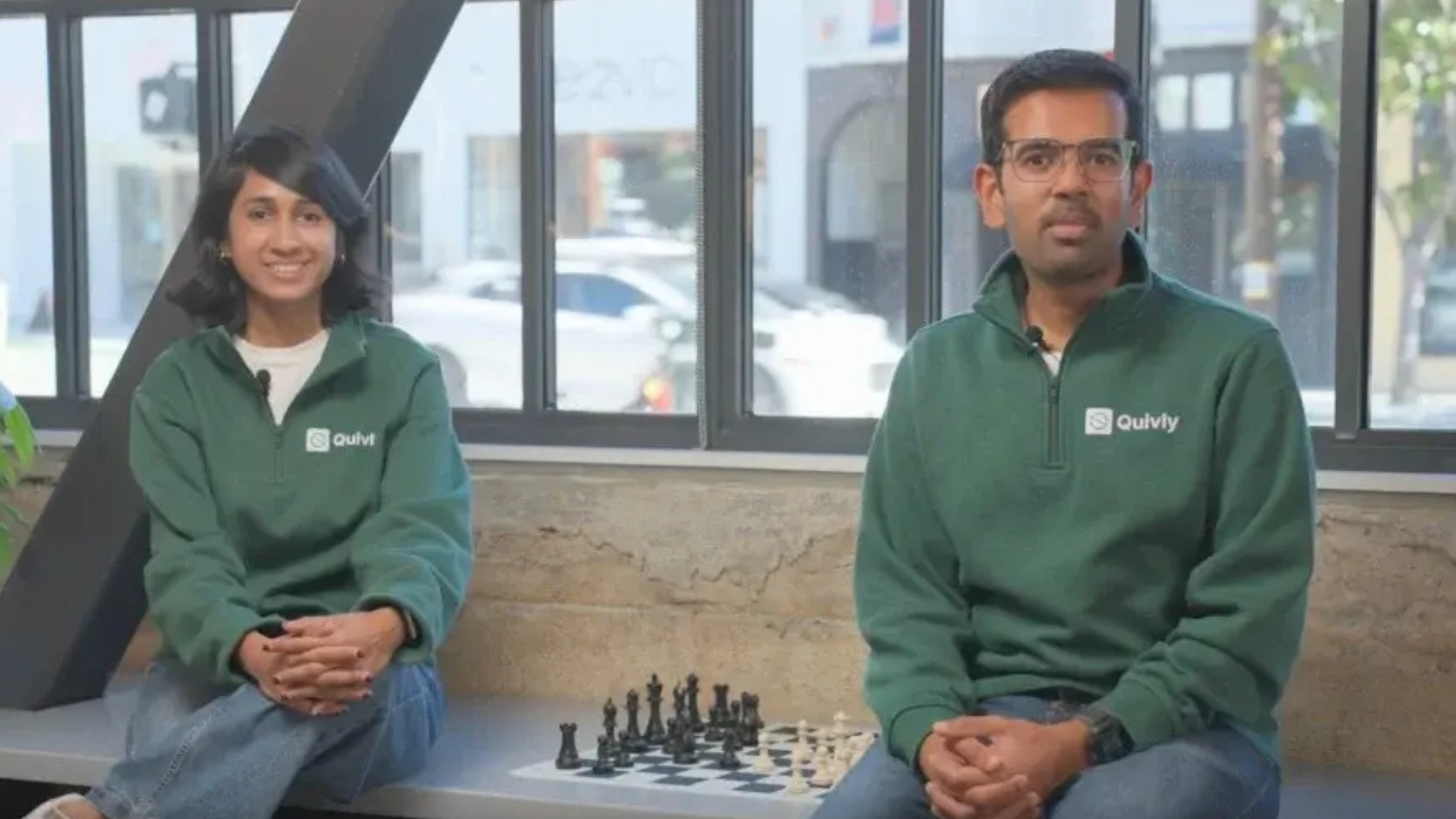

Quivly AI wants to tackle a revenue problem that starts after a software deal is signed: getting the customer to actually use what they bought. The startup’s AI agents coordinate onboarding, watch for declining activity and flag opportunities to expand an account, with particular attention to businesses that charge customers based on usage.
That focus gives its October 8 launch a practical premise. For a company selling consumption-based software, a signed contract doesn’t settle the question of how much the customer will spend. Delays in setup and declining use can become revenue problems. Quivly is pitching a system that follows the account through those changes, rather than leaving staff to reconstruct events from conversations and support tickets.
The company describes an onboarding workflow that begins with the kickoff call. Its agents turn the discussion into a plan that customers can see in a shared portal. If an outstanding task such as single sign-on configuration prevents a rollout, an agent follows up with the person responsible. The intended result is less manual coordination between customers and the team trying to get them live.
The same account record then informs subsequent work. In one illustrative scenario from the announcement, falling usage and an unresolved support ticket prompt intervention before an account manager has connected the two. In another, news that a customer has acquired a business becomes a possible expansion opportunity. At renewal, the system brings together the history of what was delivered, what changed and where the account might grow.
Quivly says teams can use the product through its application, Slack or an MCP connection. That last option lets the service participate in workflows through compatible AI tools. Its launch includes a demonstration of the product, along with examples of the chat-based interfaces.
Watch Quivly’s launch demonstration
The startup reports that it manages more than 10,000 accounts on behalf of its customers, naming Siftly, Octolane and Hyperspell among those customers. That figure describes accounts managed, not 10,000 companies purchasing Quivly. It also reports a reduction in onboarding time from 30 days to seven, average revenue expansion of 4.3 times and eight hours saved per forward-deployed engineer each week.
Those are company-reported results. The announcement doesn’t provide the sample sizes, measurement periods or methodology needed to establish how representative they are. The distinction matters for prospective buyers: faster setup is one outcome, while sustained account growth depends on what customers do after deployment.
Founders Chandrika Maheshwari and Tanay Agrawal bring experience with both customer operations and the systems that monetize software. Maheshwari previously founded Pull, a payroll-linked lending business, and worked at Plaid, DocuSign, Google and Bain. Agrawal was a founding product manager at Atlan and later worked on pricing and billing infrastructure at JPMorgan Payments, according to the launch. Quivly is part of Y Combinator’s Fall 2026 batch.
The company is seeking B2B founders, customer-success leaders and engineers who are struggling to keep up with a growing customer base. Its concrete test will be whether handing routine follow-ups to agents helps those teams resolve the next blocked rollout, before a customer’s lack of activity becomes an account they have to recover.
Lorem ipsum dolor sit amet, consectetur adipiscing elit. Suspendisse varius enim in eros elementum tristique. Duis cursus, mi quis viverra ornare, eros dolor interdum nulla, ut commodo diam libero vitae erat. Aenean faucibus nibh et justo cursus id rutrum lorem imperdiet. Nunc ut sem vitae risus tristique posuere.

Built for Delaware C-Corps. Trusted by 2,000+ startups.












Copyright © Fondo (BloomJoy, Inc.)