An AI model can propose a material without ever touching one. Primordiant is working on the next step: robots that turn a proposed experiment into physical work, then return observations that can inform what to try next.
The startup's long-term ambition is to make laboratory experimentation available through software, much as developers request computing resources. Its current work is considerably more concrete. Primordiant says it has taken an early robot into a client's wet lab and is running another project involving heat-resistant polymer coatings.
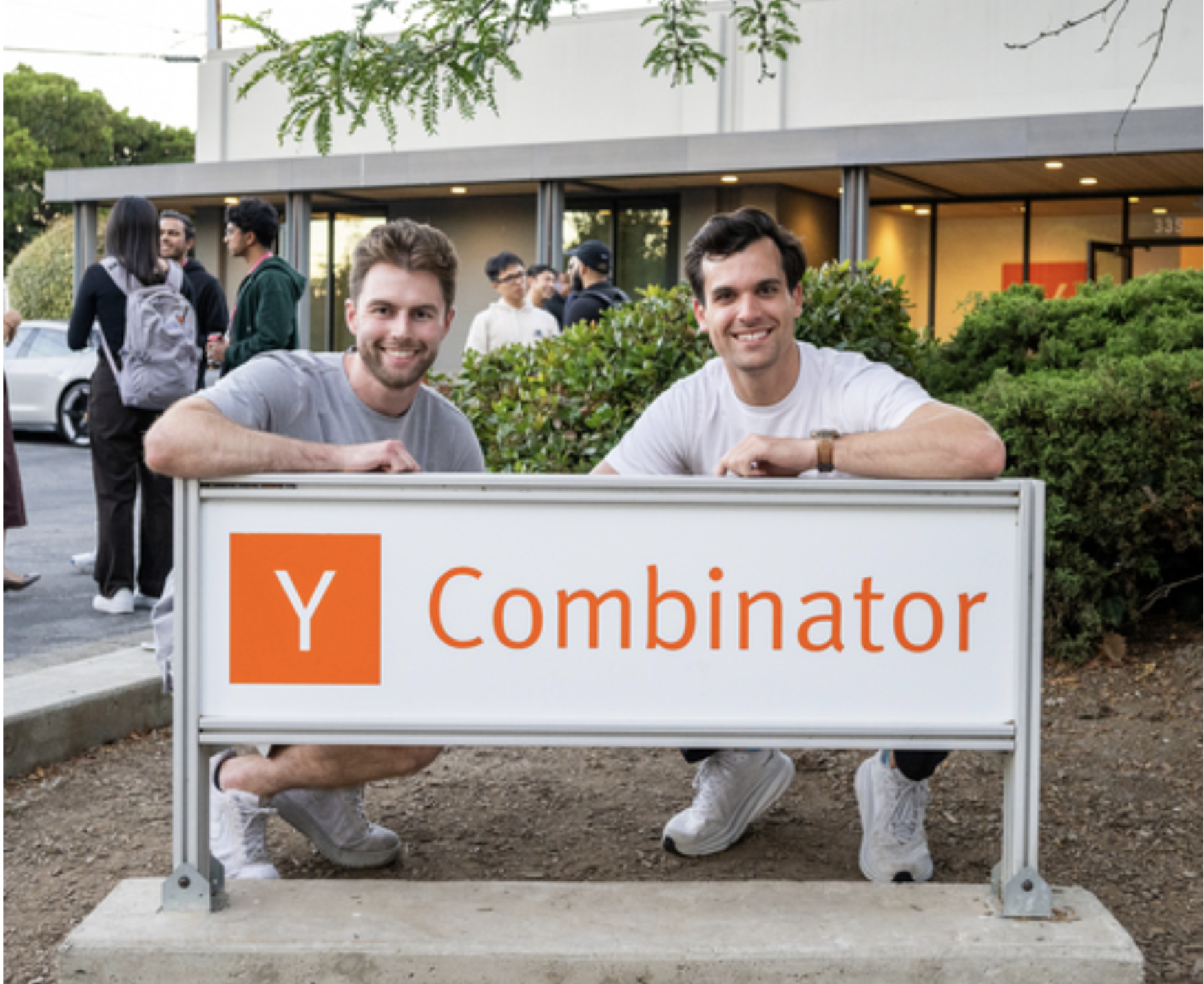
Founded by Owen Tower, Cooper Niu and Benedict Quartey, all Brown University PhDs, the company is part of Y Combinator's Fall 2026 batch. It describes general-purpose robotic scientists that could work in its own facilities or in a customer's laboratory.
The challenge is flexibility. A machine designed around one repeated procedure can be useful without being able to handle a different experiment. Primordiant wants its robots to adapt to changing laboratory tasks, which would let researchers request new work without rebuilding an entire automation setup each time.
Watch Primordiant's original launch video.
That goal connects the physical lab to a growing supply of computational ideas. A model might suggest a promising formulation, but a researcher still needs to make it, measure its properties and decide whether the result supports the hypothesis. Primordiant is targeting that physical feedback loop rather than stopping at a prediction.
In its launch announcement, the company says it built its first robot in fewer than three weeks and brought it to an early client's wet lab. It later established a laboratory in Mountain View. For a second client, the team says it is synthesizing and testing heat-resistant polymer coatings proposed by AI models.
Those accounts describe early projects, not proof that a broad range of experiments can already be purchased as a reliable, standardized service. Primordiant's website presents the product as an early beta, and the public launch does not offer independent benchmarks for accuracy, throughput or cost.
The founders' backgrounds map onto the work. Tower studied experimental physics, with research involving phase transitions and micro- and nanofluidics. His public biography includes experience at NASA's Jet Propulsion Laboratory and CERN. Niu's physics background includes work at Fermilab and CERN and research on AI-driven scientific reasoning.
Quartey's computer science research focused on robotics, foundation models and symbolic planning. His background also includes the Boston Dynamics Robotics & AI Institute. Together, the team spans proposing experiments, building apparatus and planning the physical actions needed to carry them out.
Primordiant ultimately describes facilities filled with adaptable robots, offering scientific work through an API. That remains a direction of travel, not a description of a mature network operating at scale. The difference matters for potential customers deciding whether they need an experimental collaborator or a predictable outsourced service.
For now, the polymer-coatings project is a useful place to judge the idea. A computational suggestion must survive contact with a real sample and produce a trustworthy measurement. Repeating that cycle across changing experiments is the work between Primordiant's early robots and its proposed scientific data centers.
Lorem ipsum dolor sit amet, consectetur adipiscing elit. Suspendisse varius enim in eros elementum tristique. Duis cursus, mi quis viverra ornare, eros dolor interdum nulla, ut commodo diam libero vitae erat. Aenean faucibus nibh et justo cursus id rutrum lorem imperdiet. Nunc ut sem vitae risus tristique posuere.

Built for Delaware C-Corps. Trusted by 2,000+ startups.












Copyright © Fondo (BloomJoy, Inc.)