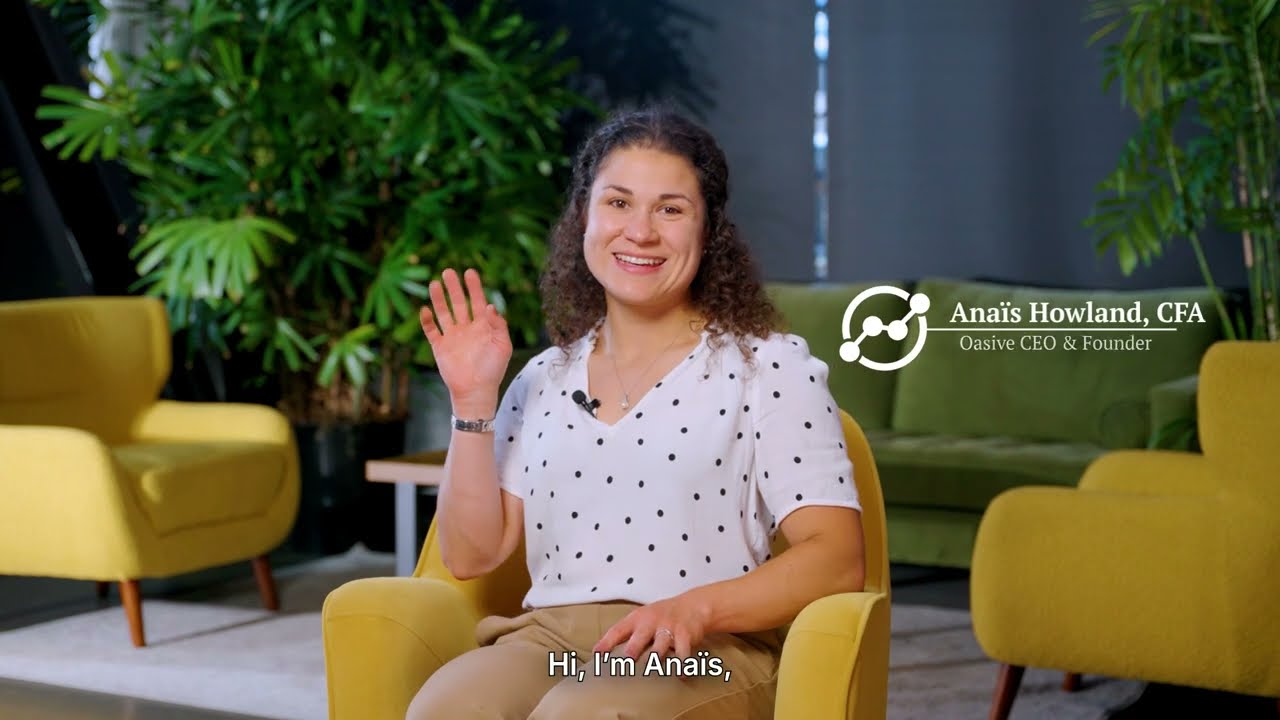
Oasive wants municipal bond analysts to find a borrower's financial warning signs before they disappear into a local news archive or an hours-long board meeting. Its research platform combines those updates with audited financial statements and the terms of the bonds themselves, linking individual figures back to their sources.
The Fall 2026 Y Combinator company was founded by Anaïs Howland, whose background spans institutional investing and AI product strategy. Howland says she managed a $17 billion bond portfolio at Google Treasury, worked as a quantitative analyst on Wells Fargo's mortgage-bond portfolio and later led AI product strategy at Google.
Her new company focuses on the borrowers behind municipal bonds, including cities, school districts and hospitals. An analyst assessing whether one of those institutions can repay its debt needs financial records, but also information about events that may change the outlook between reporting periods.
A budget dispute or a lawsuit can surface in a meeting or small publication long before it becomes a neatly structured data point. Oasive's approach is to bring those developments into the same research workflow as the financial statements, with enough source detail for an analyst to check what the software found.
Watch Oasive's launch demonstration
The service searches news daily, selects stories it considers relevant to credit and associates them with the appropriate borrower. It also reads meeting agendas and minutes, highlighting financial items and their dollar amounts. For recorded meetings, it produces transcripts and links an extracted point to the corresponding moment in the video.
Analysts can follow borrowers and bonds through watchlists, putting changes in ratings, leadership and filings alongside the news feed. The purpose is to make ongoing monitoring practical across a portfolio, rather than require a fresh document hunt whenever someone wants an update.
The underlying research is organized into two kinds of pages. A borrower page contains multiple years of audited financials, outstanding debt and information about the local economy. The metrics change with the sector: hospital research includes cash reserves and patient volumes, while an airport page emphasizes passenger traffic and airline concentration.
A separate bond page describes what supports the obligation, including its lien, reserve fund and call features. It also brings together debt service and trading activity, with the official statement attached. That separation preserves the difference between understanding an institution and understanding the particular security an investor is considering.
Oasive also offers a question-and-answer interface for researching a credit or comparing it with peers. The company says answers cite the relevant audit, official statement or meeting recording, and that it rechecks financial figures against their source documents daily.
Those citations are central to the product's usefulness: analysts can follow a result back to a page or recording instead of relying solely on a generated explanation. They do not establish that every extraction or interpretation is correct, and the launch does not provide an independent accuracy benchmark.
Howland says analysts at asset managers and insurers helped build the product and are using it today. Oasive is seeking introductions to municipal-bond investors at those institutions, as well as banks and hedge funds, with demonstrations available through its website.
Lorem ipsum dolor sit amet, consectetur adipiscing elit. Suspendisse varius enim in eros elementum tristique. Duis cursus, mi quis viverra ornare, eros dolor interdum nulla, ut commodo diam libero vitae erat. Aenean faucibus nibh et justo cursus id rutrum lorem imperdiet. Nunc ut sem vitae risus tristique posuere.

Built for Delaware C-Corps. Trusted by 2,000+ startups.












Copyright © Fondo (BloomJoy, Inc.)