Lantern is building a recruiting platform whose agents share what a company learns during hiring. A sourcing agent, an application reviewer and an interview assistant are intended to work from the same context, with later searches informed by interview notes and decisions from earlier ones.
The company's launch describes two models behind that workflow. One maps the outside talent market, drawing on what Lantern says is a billion-professional network with changing career signals. The other models a customer's hiring preferences using its context, interview notes and hiring history. Lantern calls that second model the company's hiring “taste.”
That term translates into a concrete product sequence. The platform can join a kickoff meeting, capture what the hiring manager wants and compare it with past decisions. It then searches for candidates and drafts outreach for a recruiter to approve. The same context carries into application review, AI interviews and scheduling.
Watch the original Lantern demonstration.
After interviews and debriefs, Lantern says the criteria used for sourcing and screening are updated. The aim is to keep the knowledge gained during a search available to the next stage and the next search, rather than leaving it dispersed across recruiters' notes and browser tabs.
The startup says it has processed more than two million candidates for companies including Crypto.com, Hyatt, Baker McKenzie and Eight Sleep. Those figures and customer relationships are reported by Lantern. The launch doesn't provide an independent evaluation or enough detail to establish what processing involved for each customer.
Customers can layer the product over an existing applicant tracking system or use it to replace that system, according to the announcement. Lantern also says its functions can be queried through Slack and Model Context Protocol integrations, making the hiring context accessible beyond the platform's own interface.
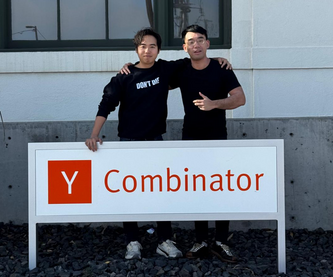
Founders Thomas Chan and Justin Tang have known each other for a decade and previously co-founded two recruiting startups, according to their launch. Chan says those earlier businesses generated $2 million in sales with clients including L'Oréal, Accenture and IBM. That sales figure belongs to the previous ventures and shouldn't be read as Lantern's revenue.
The company is in Y Combinator's Fall 2026 batch. Its public profile also describes a separate people-data offering for agents, but the recruiting launch centers on coordination: carrying the same understanding of a role through sourcing, review, interviews and reporting.
The difficult question is what the system learns from historical decisions. Reusing context can reduce repeated explanation, but a past acceptance or rejection doesn't automatically establish a useful criterion for a new role. The launch doesn't publish an evaluation of how the platform distinguishes durable requirements from incidental preferences.
That leaves a clear operational proposition and a test for customers. A useful shared model should make the reasoning behind a shortlist easier to inspect, while allowing the team to revise what it is looking for. Lantern's next search is supposed to begin with what the last interview taught it. Whether that produces better matches depends on which lessons it keeps.
Lorem ipsum dolor sit amet, consectetur adipiscing elit. Suspendisse varius enim in eros elementum tristique. Duis cursus, mi quis viverra ornare, eros dolor interdum nulla, ut commodo diam libero vitae erat. Aenean faucibus nibh et justo cursus id rutrum lorem imperdiet. Nunc ut sem vitae risus tristique posuere.

Built for Delaware C-Corps. Trusted by 2,000+ startups.












Copyright © Fondo (BloomJoy, Inc.)