Cyclon wants to replace the sequence of opening apps, finding information and passing it between screens with a single request to a phone. Its first customers will try that idea on a Google Pixel 8a running Cyclon’s software, while the startup develops a device of its own.
The hardware distinction is important. Cyclon’s website labels its custom phone as a concept in development. It lists a refundable $199 preorder deposit toward an estimated $699 final price, with the phone expected in the second quarter of 2027 subject to FCC authorization. The early-access Pixel is the prototype, not the finished custom handset.
Founders Adam Zinebi and Thomas Kiefer are putting the agent into the operating system so it can work across notifications and existing apps. Their launch demonstration includes an incoming request for photos: the system prepares the relevant pictures in the background and leaves the user to approve sending them.
Watch Cyclon’s original launch video.
The company also describes creating small applications on demand. A user asks for a tool, and Cyclon writes and tests code in a sandbox before installing the result. Notification handling is another part of the pitch, with preferences about what to hide or surface carried into subsequent use.
These are related jobs with different consequences. Summarizing an alert changes what a user sees. Sending photographs or acting inside an account shares information or changes something elsewhere. A phone that crosses those boundaries needs understandable controls about when it may proceed and when it should ask.
Cyclon’s site says the system works through users’ existing accounts and follows their rules. The launch video offers examples of the interaction, but does not establish how reliably the phone handles arbitrary requests across every app. That broader claim will be tested in the early-access program.
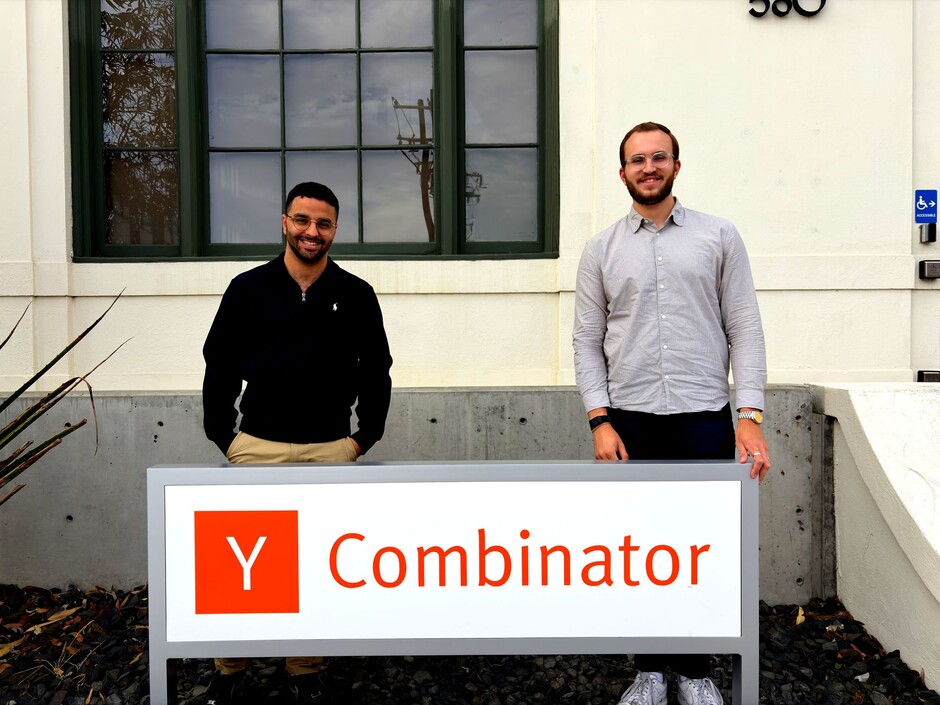
The founders’ backgrounds span the two halves of the product. Kiefer previously worked on Android at Google, according to his YC profile. Zinebi studied electronics and miniaturized hardware at EPFL. They are part of Y Combinator’s Fall 2026 batch.
Building the software on an existing handset lets the company put the interaction model in users’ hands before completing a new hardware design. It also gives those users a straightforward comparison: which daily tasks become easier, and which still send them back to another phone?
The launch illustrates the intended workflow with a request to find a contract, send it to a colleague and place a call. Today, that might involve a file-storage app, a sharing-permission check and a messaging app. Cyclon wants the operating system to hold the context across those steps. Its examples also describe background tasks that continue while the owner does something else.
The founders say their longer-term plan is to own both the hardware and software, rather than remain an additional app. They also report winning YC’s Call-My-Agent hackathon against more than 90 teams. That result offers background on the team, not a reliability measurement for the phone.
That is a more demanding test than a polished demonstration. Cyclon’s first batch is an opportunity to discover the limits of its cross-app workflow while the custom device is still being built.
Lorem ipsum dolor sit amet, consectetur adipiscing elit. Suspendisse varius enim in eros elementum tristique. Duis cursus, mi quis viverra ornare, eros dolor interdum nulla, ut commodo diam libero vitae erat. Aenean faucibus nibh et justo cursus id rutrum lorem imperdiet. Nunc ut sem vitae risus tristique posuere.

Built for Delaware C-Corps. Trusted by 2,000+ startups.












Copyright © Fondo (BloomJoy, Inc.)