Artie learned to operate Kafka while moving customers’ database changes into analytics systems. Now it is selling that operating experience separately, with a managed Apache Kafka service priced as infrastructure costs plus a management fee.
The company’s launch pitches savings against Amazon Managed Streaming for Apache Kafka, or MSK. But there is a consequential detail in the comparison: Artie’s launch configuration uses one availability zone, while the quoted MSK configuration spans three. A lower bill is not automatically an equivalent resilience package.
In its launch announcement, Artie estimates a roughly $436 monthly bill for an example cluster, compared with about $1,110 on MSK. Those are company calculations under stated assumptions, not an independently measured saving for every workload. Multi-zone deployment is listed as planned, rather than included in that launch configuration.
The origin story is more revealing than the headline discount. Artie says a spike in MSK authentication activity in May 2024 triggered repeated reconnecting and rebalancing in its data infrastructure. The team changed connection behavior, changed authentication and eventually moved to Kafka it operated itself. The new product packages the tooling developed along the way.
That background fits Artie’s existing business. Its core platform captures database changes and streams them into destinations used for analytics and AI. Keeping those changes moving gives the company a direct reason to care about broker failures, lag and the administrative work around Kafka.
The managed service runs actual Apache Kafka on AWS, either in Artie’s cloud or the customer’s own AWS account. Pricing follows the underlying AWS on-demand infrastructure bill, with a management fee equal to 25% of broker EC2 costs. Customers still need to compare storage, traffic and their chosen configuration, rather than apply a universal percentage discount.
Artie says it handles broker recovery, partition rebalancing, rolling upgrades and disk expansion within configured limits. It also exposes activity logs and metrics, including a Datadog integration. These are the recurring jobs that make a production cluster more work than simply launching a few servers.
Security features listed for the service include TLS, SASL/SCRAM authentication and network allowlists. API and MCP access provide ways to inspect or operate the service, with read-only access available for agents. Other features, including additional clouds and private connectivity options, remain on the roadmap.
Migration is another part of the offer. Artie describes engineer-assisted migration using MirrorMaker, rather than presenting a fully automated migration dashboard as already available. For a team with an existing cluster, the cost of moving traffic and checking continuity belongs alongside the prospective monthly infrastructure savings.
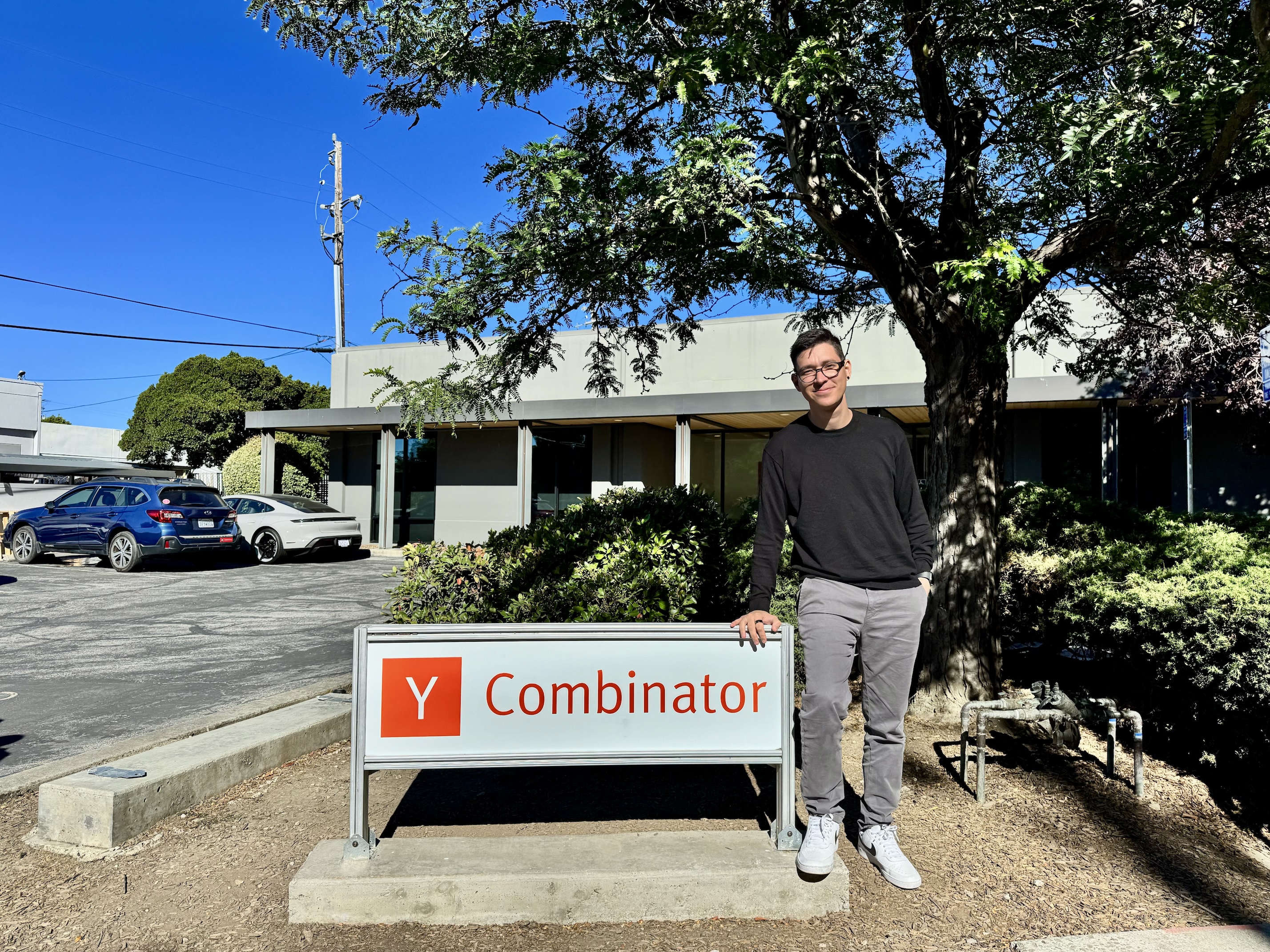
Founders Jacqueline Cheong and Robin Tang lead the company, which joined Y Combinator’s Summer 2023 batch. Tang’s background is in distributed systems; Cheong has built Artie around the operational demands of real-time data replication.
The launch walkthrough introduces the service. For prospective customers, the decision starts with workload requirements and failure tolerance. Artie’s transparent fee structure makes the cost easier to inspect, but the availability architecture still needs to match the application before the price comparison becomes useful.
Lorem ipsum dolor sit amet, consectetur adipiscing elit. Suspendisse varius enim in eros elementum tristique. Duis cursus, mi quis viverra ornare, eros dolor interdum nulla, ut commodo diam libero vitae erat. Aenean faucibus nibh et justo cursus id rutrum lorem imperdiet. Nunc ut sem vitae risus tristique posuere.

Built for Delaware C-Corps. Trusted by 2,000+ startups.












Copyright © Fondo (BloomJoy, Inc.)