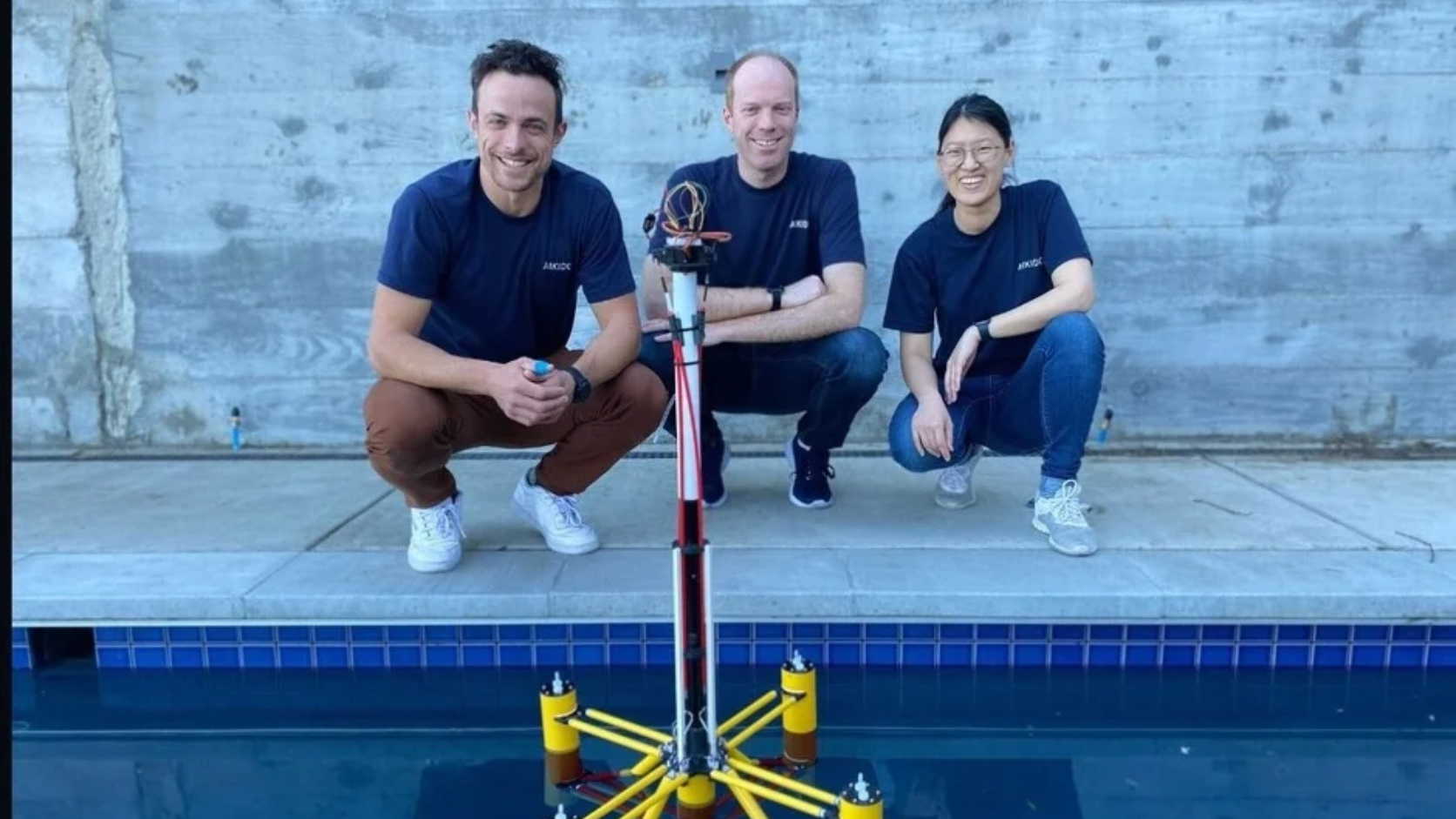
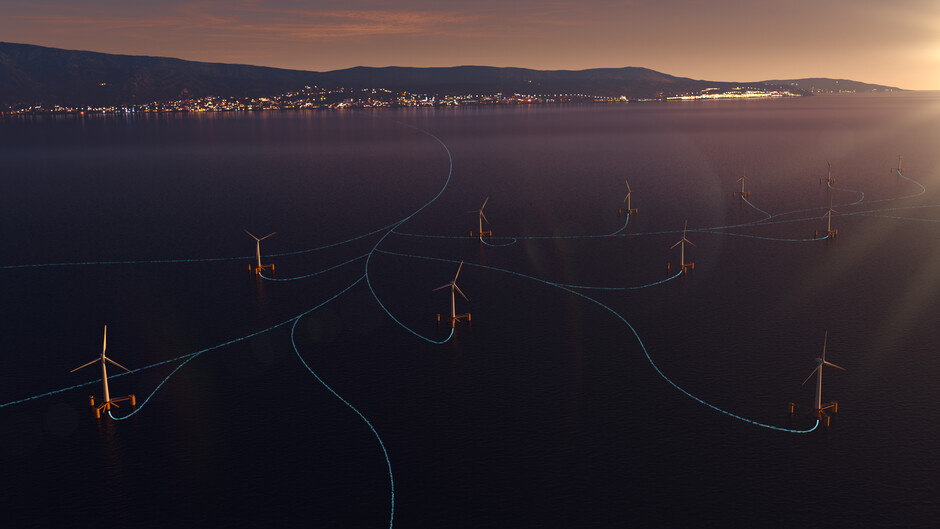
Aikido Technologies is taking the search for data-center power offshore. The startup is developing floating platforms that combine computing equipment, wind generation, batteries and seawater cooling, and says its first demonstration unit is scheduled to enter the water in December.
The company's launch puts two projects on different timelines. The smaller A1DC unit is already being retrofitted, according to Aikido, with a test fit planned for November. A full-scale design called AO60DC is further out: final design and third-party certification are planned to begin later this year, construction next spring and deployment late next year.
Keeping those stages separate matters. Aikido is describing an infrastructure development program, not announcing a fleet of operational offshore GPU facilities. It says customers are lined up to rent capacity on the first unit, but doesn't name them or disclose contracted revenue.
The proposed full-scale platform is roughly the size of a football field. Aikido says its design supports 5,000 to 6,000 GPUs alongside a 15-to-18-megawatt wind turbine, several hours of battery storage and backup generation. Data halls would be cooled indirectly by seawater and connected to shore through subsea fiber.
Watch Aikido's original launch video.
The ocean offers a compelling combination of wind and cooling, but it also turns routine maintenance into a marine operation. Aikido says its plans include robotic inspection, offshore service vessels and human access by boat or helicopter. Those are design and operating plans; the announcement doesn't provide a long-term reliability record for an offshore data center.
The team does have experience building infrastructure at sea. Sam Kanner and Bingbin Yu met in 2014 at a company working on floating offshore wind. They later joined Otherlab, where they met James Reeves, whose background includes helicopter design. The three founded Aikido in 2022 with support from the Breakthrough Energy Fellows program, then shifted toward data centers in early 2025, according to the launch.
Aikido is now part of Y Combinator's Fall 2026 batch. Its approach uses prefabricated components assembled near the deployment site, borrowing from offshore wind and oil-and-gas supply chains. The company's website describes factory-built data halls and modular steel structures, with the wind turbine installed using land-based cranes before the platform moves offshore.
The launch makes broad claims about avoiding permitting constraints at sufficient distance from shore. Those claims aren't independently established here, and the company also says it received final permits for its first platform in September. Offshore deployment should therefore be understood as a proposed way to change the infrastructure constraints, not a verified exemption from them.
The next milestones are physical ones: the November fit-up, the December demonstration and the certification work for the larger design. Aikido is seeking prospective buyers for its first 10-megawatt unit, including AI labs and compute providers. Before the gigawatt-scale vision can be assessed, the company has a more immediate test: getting working compute onto a platform and keeping it operating at sea.
Lorem ipsum dolor sit amet, consectetur adipiscing elit. Suspendisse varius enim in eros elementum tristique. Duis cursus, mi quis viverra ornare, eros dolor interdum nulla, ut commodo diam libero vitae erat. Aenean faucibus nibh et justo cursus id rutrum lorem imperdiet. Nunc ut sem vitae risus tristique posuere.

Built for Delaware C-Corps. Trusted by 2,000+ startups.











Copyright © Fondo (BloomJoy, Inc.)