.png)

When running any business, especially a startup, it's necessary to understand the difference between profit and cash flow.
While profit is a meaningful metric, you won't be able to cover your business expenses without sufficient cash flow.
So, how do you achieve a profit and cash flow balance?
Let's start by analyzing their differences to understand how they are significant to any business.
Profit is the difference between what you receive in revenue and how much you spend on buying, running, or producing something. Profit is the ultimate goal of any business.
Profit is further divided into three types:
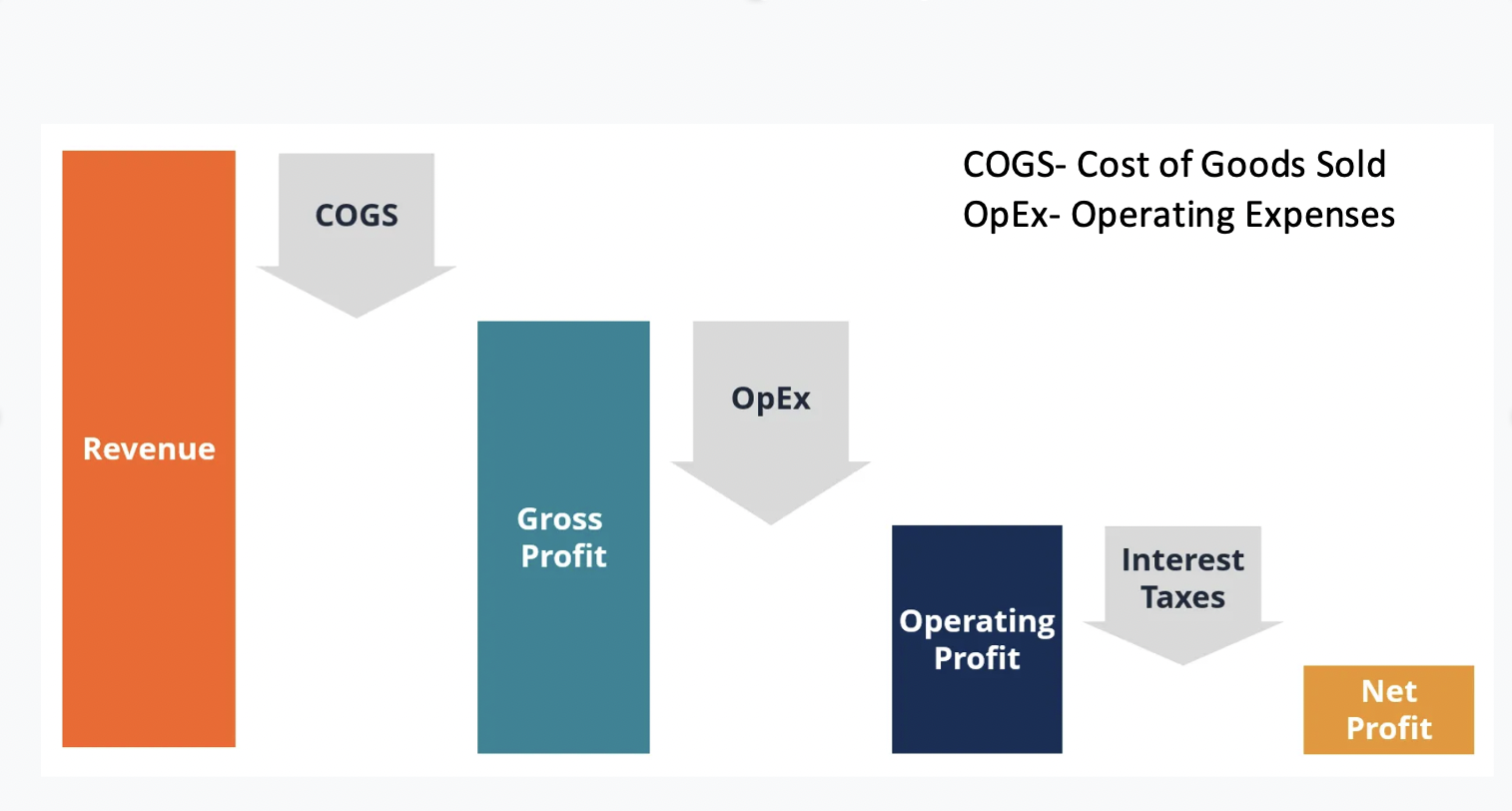
Profit can be shared between company owners and shareholders, reinvested to purchase new inventory, or fund research and development (R&D) for new products and services.
Cash flow is the amount of money coming in (cash inflow) and going out (cash outflow) at a given time. For example, cash flows out of your business when you buy inventory, but cash flows into your business when your customer pays you cash for your product.
Cash flow can either be positive or negative. A positive cash flow is when your inflow is higher than your expenses, and a negative cash flow is when you're spending more cash than you're bringing in.
Cash flow can be further divided into:

Profit is an accounting measure. It includes things like equipment depreciation and purchases on credit. Cash flow is the flow of incoming and outgoing cash in a business.
For example, suppose you deliver a product to your customer for $10000. If its total production cost was $7000, you make a profit of $3000. You submit the invoice, and your customer agrees to pay you within 30 days.
You made a profit, but the inflow of cash hasn't occurred. You need cash to keep your business running. IOUs aren't getting that done.
Your company may be making a profit but still experiencing a cash flow crunch. That can interrupt normal functioning. You need to pay your suppliers and employees on time and need cash to meet other operational expenses. Your creditors can force you to file for bankruptcy, even when your business is profitable since you can't meet your financial commitments.
If you take out a loan, it will increase your cash flow. This is true even though a loan doesn't count as profit. Positive cash flow can give you a jump start to take up new projects, but the interest of the incurred loan will affect your profit margin down the road.
Just as profit doesn't guarantee steady cash flow, steady cash flow does not guarantee profit. Unprofitable businesses can have positive cash flow, while profitable companies can go under without positive cash flow.
You can run a business that's not profitable, at least for a while (look at Amazon). But you can't maintain and grow a business for long if you don't have positive cash flow.
If profitability determines the long-term health of your business, cash flow contributes to how fast your business can grow and its short-term viability.
The most common mistake startups make is not realizing how vital cash flow is until they get to the stage where they need to raise money. Once you learn how critical cash flow is, you begin to take steps to improve your cash flow.
You may have heard this expression before; “Cash Flow is the lifeblood of a business.” It represents the amount of money your company has to operate and grow. Profits can be delayed in both the short and long term.
A healthy business keeps a balance between profit and cash flow. Develop strategies that enable you to have a handle on your cash flow and ensure steady and active growth in business.
Here are a few strategies that can help you maintain profit and cash flow:
Be clear about your payment terms. Ensure that you receive payments on time. Encourage early payments with attractive incentives and emphasize penalties for late payments.
Leasing equipment might seem a burden for some businesses, but it's a great way to reduce negative cash flow when necessary.
Cut any unnecessary expenditure, like unused office space, inventory, or expensive employee plans. Plug these unnecessary cash leaks to reduce your cash outflow.
Generate a cash flow statement by recording your financial transactions. This will give you a detailed account of your cash inflows and outflows.
Analyzing your cash flow will help you anticipate problems and plan for the future. Study your cash flow history to identify cash flow swings and act beforehand.
A cash flow forecast is a document that displays the influx of money and its outflow over a period in your business. It's prepared by analyzing your cash flow history and calculating your weekly cash flow.
A cash flow forecast can highlight the peaks and valleys and help you manage your expenses accordingly.
Invoice factoring is a way to improve cash flow by selling your outstanding invoices to a third party. The third party will buy your invoice for a predetermined fee and immediately pay you a portion of the amount. Your cash flow improves, and you are free from the hassle of chasing your client.
Building a friendly relationship with your vendors with constant communication and early payments can improve negotiations on existing contracts.
You can also look for vendors ready to provide better, affordable contracts.
Don't be afraid to negotiate extended payment terms with your vendors. Also, ask if there are any early payment discounts. This can help pump your profit and reduce your cash outflow in case of surplus.
A high-interest saving account ensures you have access to liquid cash while building your cash reserve.
Find out areas that you can outsource based on your business instead of hiring a full-time employee. It is cost-effective and increases cash flow.
A balance between profit and cash flow is crucial for running a successful business and attaining your goals. But negative cash flow can sink a business quickly, while profit can be deferred. Develop strategies that best suit your business to achieve a balance between them.
Lorem ipsum dolor sit amet, consectetur adipiscing elit. Suspendisse varius enim in eros elementum tristique. Duis cursus, mi quis viverra ornare, eros dolor interdum nulla, ut commodo diam libero vitae erat. Aenean faucibus nibh et justo cursus id rutrum lorem imperdiet. Nunc ut sem vitae risus tristique posuere.

Built for Delaware C-Corps. Trusted by 2,000+ startups.












Copyright © Fondo (BloomJoy, Inc.)