.png)
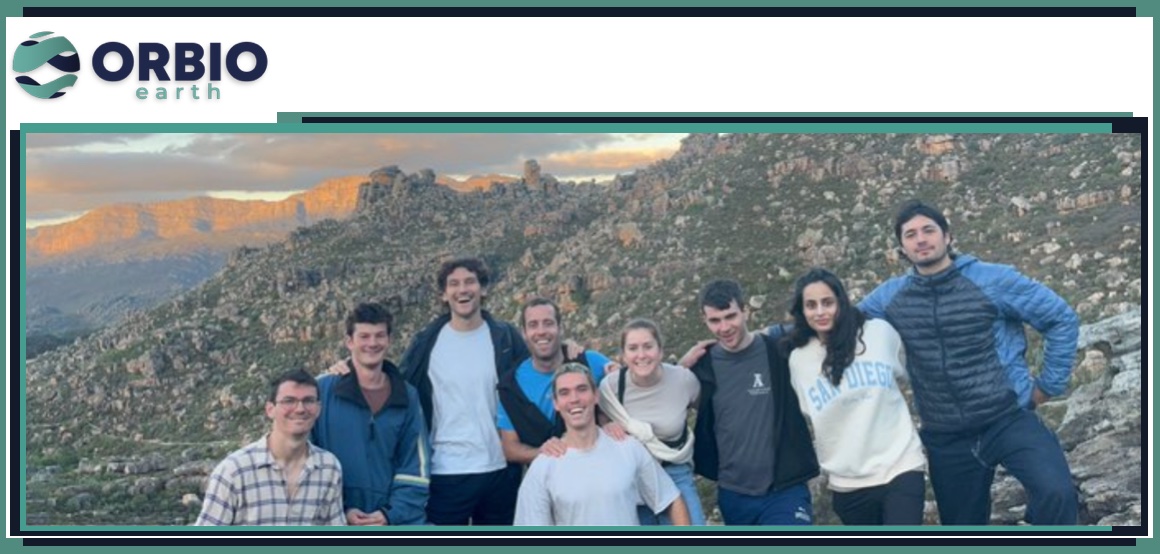
Orbio Earth launched on Y Combinator's "Launch YC" recently!

Orbio Earth monitors methane emissions with satellites, making it easy for sustainability risk analysts to identify large emission risks in global energy portfolios.
Founded by Robert Huppertz, an Ex-ML Engineer NASA Harvest; Ex-Cervest and Jack Angela, a climate optimist building out product and commercial strategy.
Orbio helps sustainability and risk analysts identify where in their large energy portfolios the biggest methane emission risks are. Identifying previously unknown risks and doing this on a frequent basis gives these analysts the tools to effectively manage emission risks.
Methane emissions from the energy industry, if prevented would have the climate impact equivalent to taking all cars and trucks off the road globally. It is a short-lived pollutant, therefore stopping this gas getting to the atmosphere is one of the best levers available in the climate change mitigation fight.
Existing data collection processes are manual, involving hand-held cameras on a site, expensive and not frequently available on all 12 million oil & gas assets globally. Poor data collection processes mean poor data.
Existing methane inventories under-represent methane emissions by around 70%. This is preventing sustainability and risk analysts from managing emissions in their global energy portfolios. Mismanagement of these emissions can lead to stock devaluations, stranded assets and increases global warming.
Orbio helps sustainability and risk analysts identify where in their large energy portfolios the biggest methane emission risks are. Identifying previously unknown risks and doing this on a frequent basis gives these analysts the tools to effectively manage emission risks.
Orbio leverages the power of satellite data. The team have developed an algorithm capable of processing data from satellites not previously designed to monitor methane emissions. Using these satellites enables Orbio to deliver world-leading data across global scales, at an asset level (e.g. an oil well) and on a frequent basis.


In 2023, a sweep of regulations is being introduced across the globe, putting pressure on the energy industry, financial professionals, and insurers—totaling around 60,000 companies worldwide—to gain a better understanding of the associated emission risks in their energy portfolios.
Lorem ipsum dolor sit amet, consectetur adipiscing elit. Suspendisse varius enim in eros elementum tristique. Duis cursus, mi quis viverra ornare, eros dolor interdum nulla, ut commodo diam libero vitae erat. Aenean faucibus nibh et justo cursus id rutrum lorem imperdiet. Nunc ut sem vitae risus tristique posuere.

Built for Delaware C-Corps. Trusted by 2,000+ startups.












Copyright © Fondo (BloomJoy, Inc.)