.png)
Mantis Biotech recently launched!

Founded by Georgia Witchel
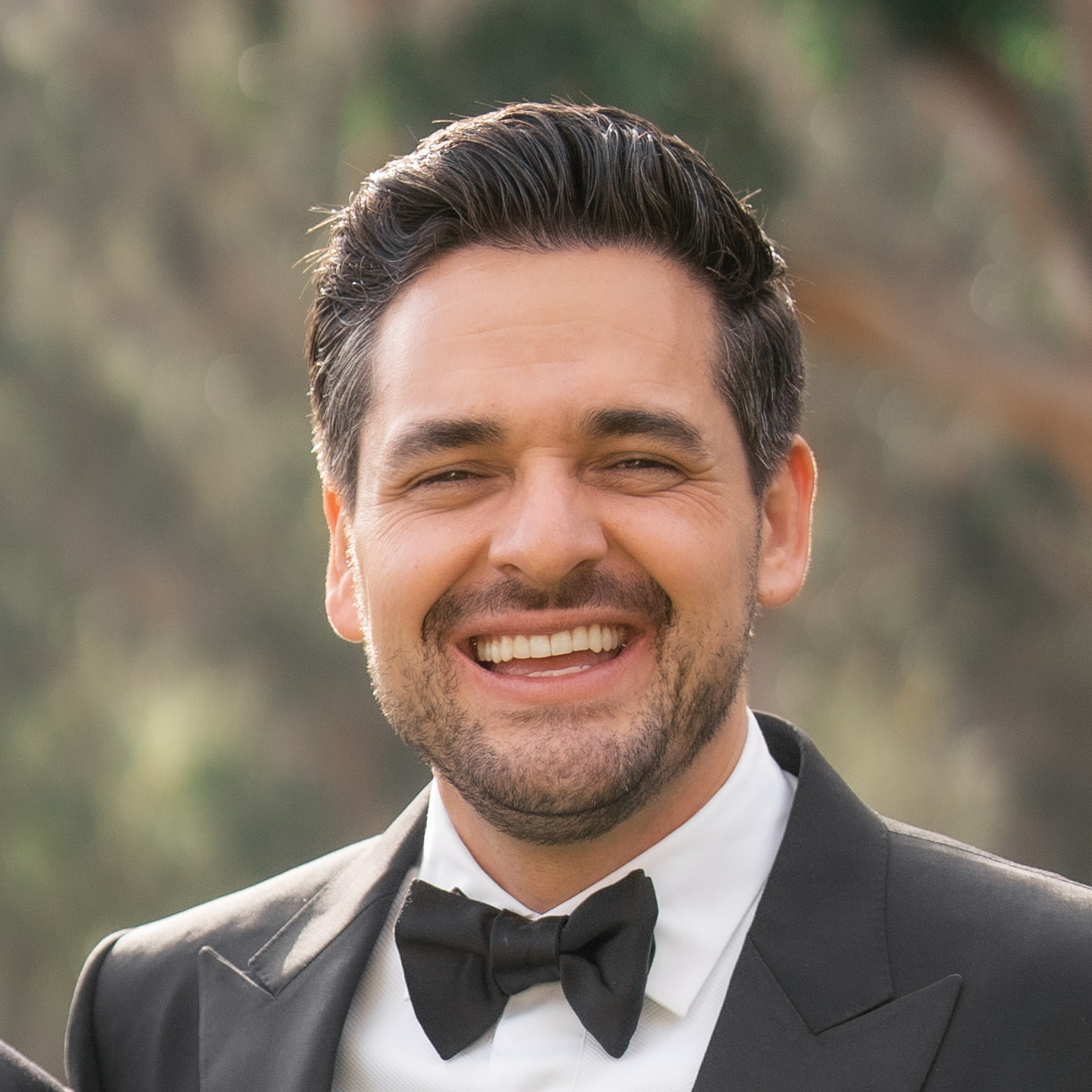
Hey everyone, meet Georgia, an extreme athlete turned software engineer and repeat biomedical founder, building Mantis Biotech.
Georgia is a former elite ice climber who helped build the U.S. team into the best in the world. She studied CS and psychology at Harvey Mudd, computational math at Johns Hopkins, and Biomedical engineering at the University of Washington. Before founding Mantis, she built Louiza Labs, a physics engine that powers digital twins for autonomous robotic surgery and simulated FDA trials.
80% of clinical trials are delayed by data inaccuracies like manual entry, inconsistent practices, and lack of validation systems. Mantis Biotech is the first company that can access all data in a clinical trial through a full-stack search. Each clinical trial loses on average $15M per trial because of data quality issues - Mantis software prevents these from appearing.
Earlier this year, an Alzheimer’s drug called Simufilam was discontinued in late-stage clinical trials due to scrutiny over data traceability. By the time the program was halted, hundreds of millions of dollars had been spent, years of potential time-to-market were lost, and 7.2 million Americans continued to suffer. This was not a standalone issue.
When trial and R&D data are fragmented across systems, every new question turns into a bespoke data project with real financial consequences. A single cross-system analysis can require 4–12 weeks of work from data engineers, biostatisticians, and clinical operations staff, often involving 3–6 people and costing $100,000–$500,000 in internal labor and vendor support before a result is produced. Because pipelines and mappings are built for one-off questions, much of that work is discarded afterward, forcing teams to repeatedly pay to reconstruct the same logic for future analyses. Over the life of a Phase II or III program, organizations may run dozens of these projects, quietly spending millions of dollars on redundant data wrangling alone.
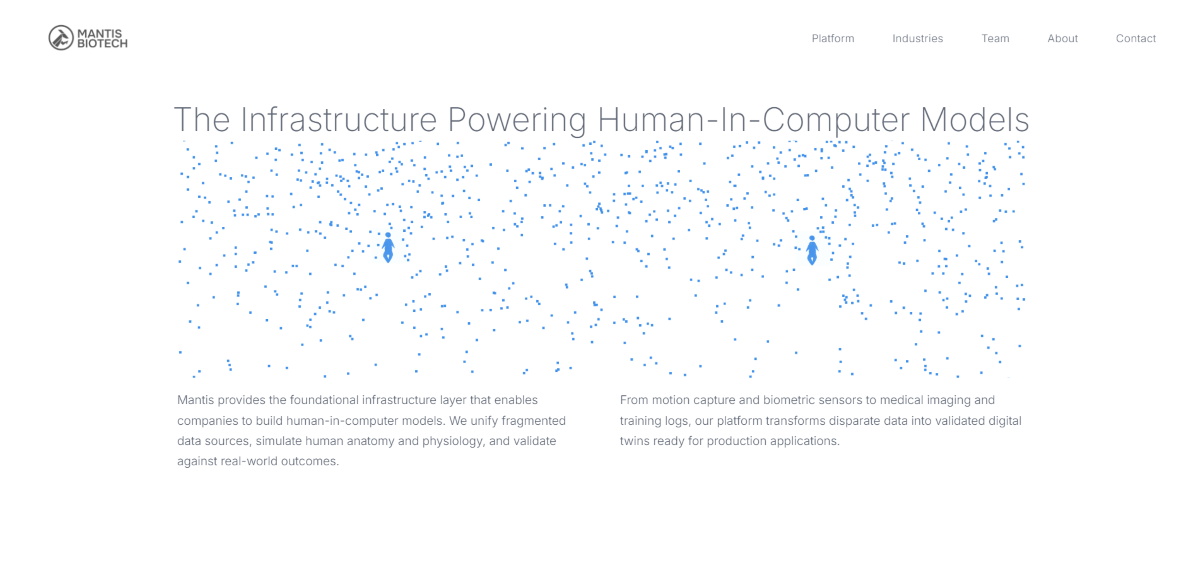
Mantis Biotech provides a domain-aware data platform for life sciences that encodes biological, clinical, and human-performance meaning directly into datasets. Instead of raw tables that must be reinterpreted for each use case, they deliver canonical, reusable, continuously maintained datasets that reflect how life sciences work in practice.
When questions arose in the Simufilam program about whether changes in a specific biomarker (e.g., filamin A–related signaling) actually correlated with cognitive scores at certain sites, timepoints, or assay runs, the Mantis platform would have let a scientist type a query like “show all patients with ≥X biomarker change, grouped by site and assay batch, alongside ADAS-Cog outcomes” and get an answer immediately, instead of coordinating data pulls from EDC, lab systems, and analysis code for weeks.
By integrating with existing life sciences systems and preserving the full lineage of source data, the Mantis platform enables teams to reuse trusted datasets across analytics, operations, AI, and compliance. Mantis Biotech allows scientists to answer questions with a single query, rather than a lengthy data project, which shortens clinical trial lengths, amplifies early warning signals, and prevents late-stage dismissal.
What Mantis offers:
https://www.youtube.com/watch?v=MT3sqNnltz4
Lorem ipsum dolor sit amet, consectetur adipiscing elit. Suspendisse varius enim in eros elementum tristique. Duis cursus, mi quis viverra ornare, eros dolor interdum nulla, ut commodo diam libero vitae erat. Aenean faucibus nibh et justo cursus id rutrum lorem imperdiet. Nunc ut sem vitae risus tristique posuere.

Built for Delaware C-Corps. Trusted by 2,000+ startups.












Copyright © Fondo (BloomJoy, Inc.)