.png)



Founded by Nicolas Machado, Robert Ross, and Nebyou Zewde
The founders at Lume are on a mission to automate the painstakingly manual process of data mapping, after experiencing this frustration as engineers themselves. They have onboarded several customers who are growing and are excited to help more teams use AI in their data mapping workflows.

🧨 ProblemThe usual mapping process involves a labor-intensive cycle: analyzing data to determine what's relevant, selecting the appropriate properties, developing the mapping logic, and constantly updating mappers to accommodate schema changes in source or target systems. This process, they learned, takes days, weeks, or even months for most teams, and automating it has traditionally been borderline impossible due to unique differences in data.
Lume uses AI to automatically map data between any start and end schema, whether it is customer data, external sources, or anything else. Lume provides this via an API and a no-code platform where you can generate mapping logic, review and edit it, and manage multiple data pipelines. Whether you want to onboard customer data, normalize data from multiple sources, or create auto-mapping UIs over Lume, Lume delivers. With automated transformations and data delivery, error and type checking, auto-maintenance with schema inference, and execution via an API or a no-code App for different use cases, teams can spend more time delivering their core value to customers instead of wrangling and manually mapping data.
• To create mappers: specify your target structure and provide a sample of source data. This can be done via the Lume API or the Lume Platform.
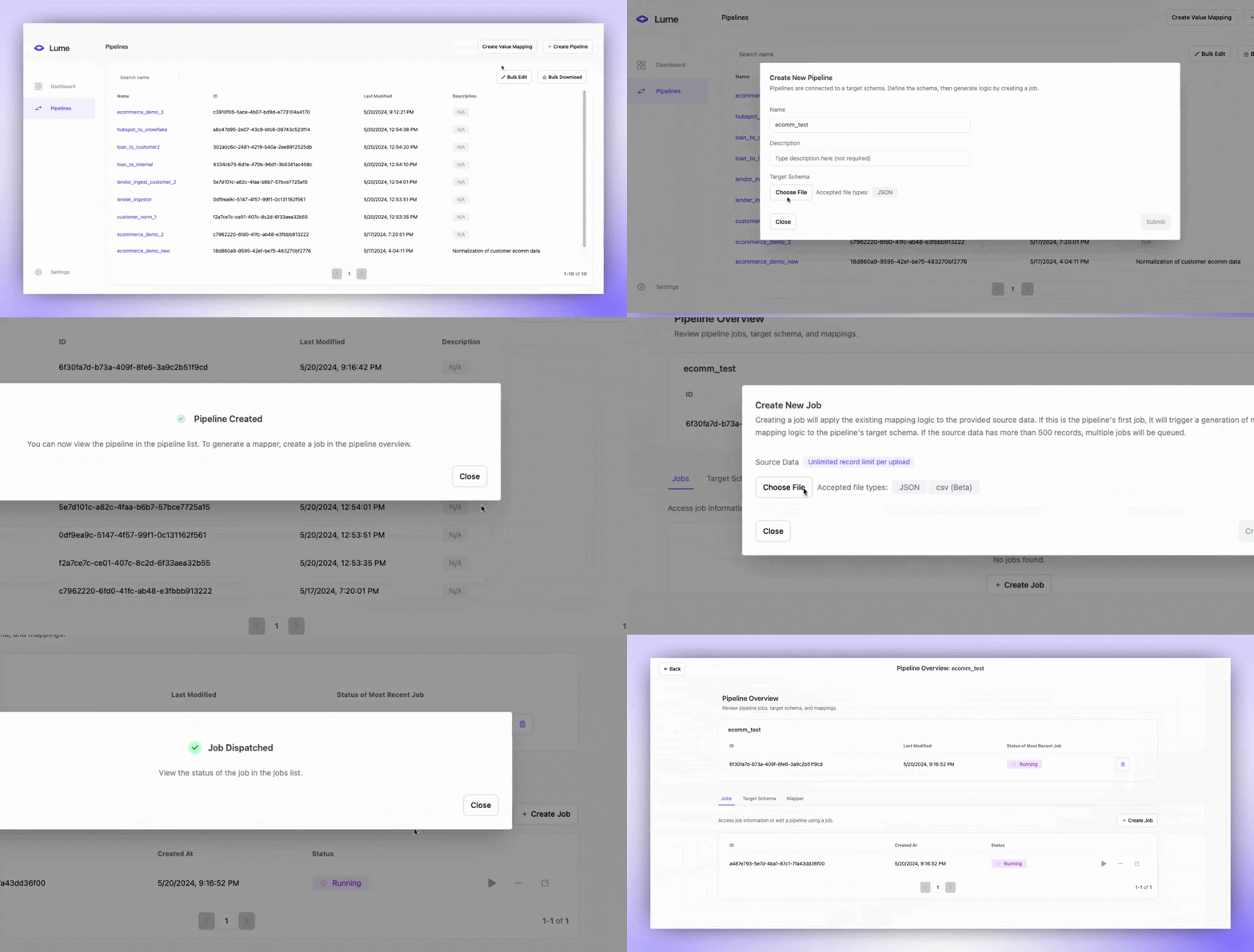
• ✨ Lume’s AI system creates the mappings between any two schemas, ranging from simple 1-1 mappings, time-series aggregations, complex calculations, and ontology classifications.
• Use the generated mappings and mapping logic: Use the Lume API or the Lume Platform to upload new incoming data and retrieve the corresponding output mapped data and mapping logic. Your data has just been automatically mapped with AI!

• For creating robust data pipelines, review and edit the generated mapping logic before running production data. Once saved, you can confidently use these mappers as deterministic pipelines. This is helpful for your data integrations between systems.

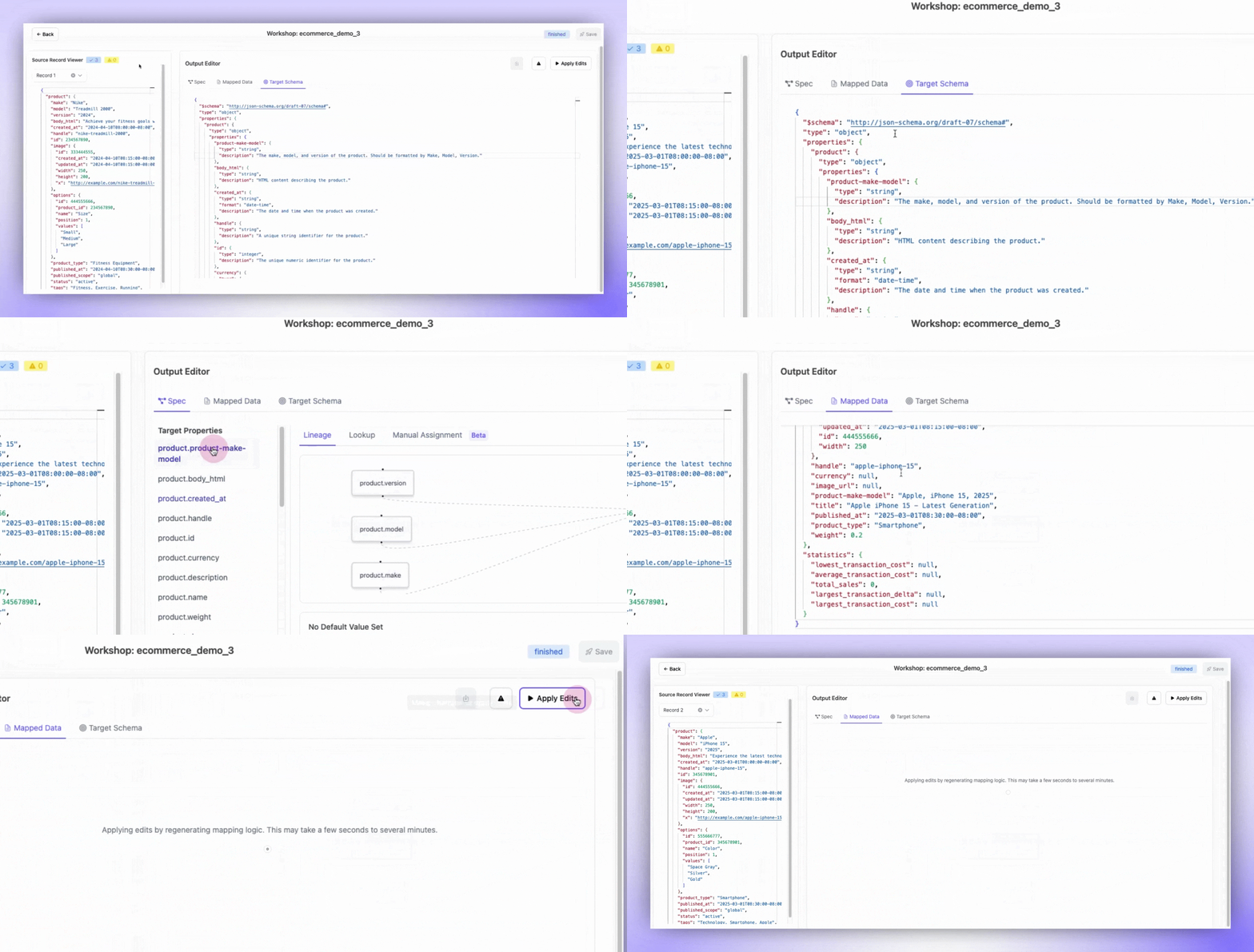
• Alternatively, build on top of the Lume API to deploy your own auto-mapper UI to allow customers to self-onboard.
Lume handles three core use cases:
Here are three customer success stories:
All of these have the common theme of having to map data between unique schemas, where even discrepancies as minor as column name variations make this process time-consuming and near-impossible to automate. This gets even worse at scale. Clients previously were allocating engineers, customer success teams, or offshore labor to analyze incoming data, map the data, and route it to their new systems. This process used to take up to multiple months for some teams, costing significant time and money.
They serve multiple industries ranging from ecommerce, insurance, manufacturing, and financial products.
Lorem ipsum dolor sit amet, consectetur adipiscing elit. Suspendisse varius enim in eros elementum tristique. Duis cursus, mi quis viverra ornare, eros dolor interdum nulla, ut commodo diam libero vitae erat. Aenean faucibus nibh et justo cursus id rutrum lorem imperdiet. Nunc ut sem vitae risus tristique posuere.

Built for Delaware C-Corps. Trusted by 2,000+ startups.












Copyright © Fondo (BloomJoy, Inc.)