.png)

Artie for Enterprise recently launched!

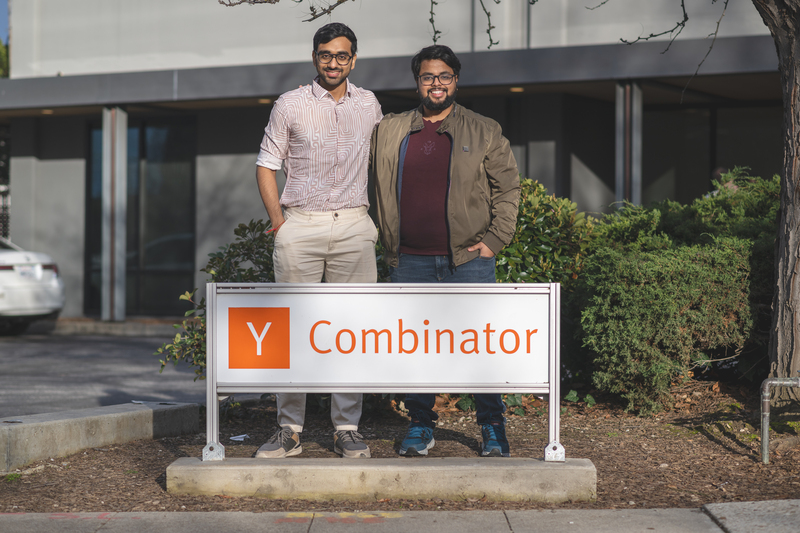
Founded by Jacqueline Cheong & Robin Tang
Enterprises need real-time, reliable, and secure data replication—but existing solutions make this far more painful than it should be.
Traditional ETL pipelines often run on fixed schedules, updating data warehouses hours behind reality and leaving teams with outdated insights. Many replication tools try to brute-force data movement by running expensive, inefficient queries that increase load on production databases, slowing down applications and, in extreme cases, even bringing them down entirely. Scaling these systems across thousands of tables typically requires manual, error-prone configurations, forcing teams to spend countless hours debugging pipelines just to keep data flowing.
On top of that, many enterprises operate in highly regulated environments where data can’t be fully offloaded to the cloud. Traditional replication solutions struggle to support hybrid deployments, forcing teams to choose between security and ease-of-use.
Terraform support
“Um, we have thousands of tables to configure. Do I really need to click thousands of times on your dashboard to get connectors set up?” The team at Artie hears this question a lot and their answer is “Absolutely not”, which is where Artie's Terraform provider comes in.
Just because your data volume is high does not mean management needs to be equally complex. No more endless clicks—just code it, deploy it, and go.
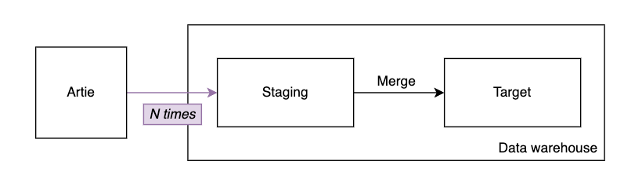
Merging large, frequently updated tables can be expensive and slow. The founders wanted to solve this problem without forcing customers to increase compute costs or scale up their virtual data warehouses.
With multi-step merge, Artie now loads data into a staging table in multiple bursts, allowing updates to accumulate before merging into the target table. This reduces latency and improves efficiency. Customers can now control how often data lands in the staging table before triggering a final merge—giving them real-time syncs with more flexibility and cost savings.
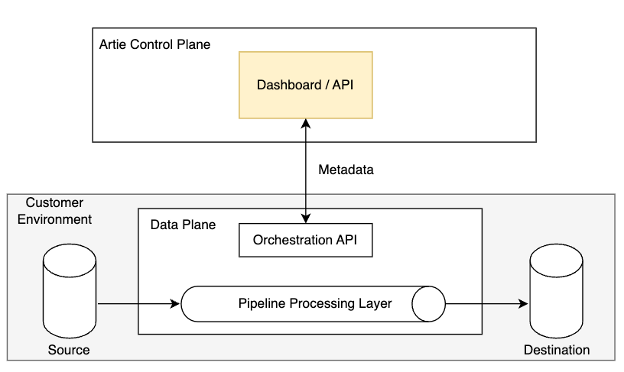
Enterprise-grade replication means deployment flexibility is non-negotiable. There are many organizations out there that handle data containing sensitive information and are required to operate under strict regulations.
Artie's hybrid deployment model ensures the security of on-premise data processing with the ease of use of cloud services. What’s more? Artie’s fully-managed service allows for zero-maintenance, and removes the need to install and manage client-side agents.
Artie has made major improvements to their MySQL connector, making it enterprise-grade with improved performance, efficiency, and automation. These updates streamline database operations, reduce disk usage and I/O load, and automate data synchronization without complex configuration requirements and management overhead.
Key improvements include full DDL and gh-ost migration support for seamless, non-disruptive schema changes, automatic fan-in for partitioned tables, and GTID support for reliable transaction replication.
Backfills can be disruptive and resource-intensive. That’s why Artie is built to seamlessly recover from errors and avoid backfills unless absolutely necessary.
However, in the event that backfills are required, how is disruption minimized? Enter PostgreSQL CTID; an alternative backfill method that is 10-20x faster than traditional methods.
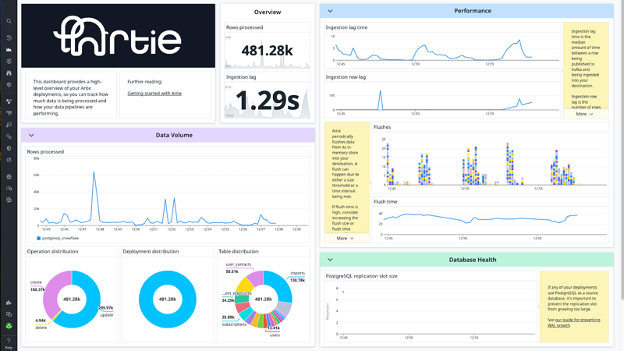
At Artie, they’ve always been big on observability. What good are your data pipelines if nobody has visibility into them? The founders prioritize accurately monitoring your pipeline performance and making sure you know what’s up.
With Artie's Datadog integration, you can now track all Artie-exposed metrics directly from your Datadog dashboard. This allows you to proactively monitor pipeline performance, set up custom alerts, and build dashboards for deeper insights.
Stay on top of your data pipeline health—effortlessly.
Lorem ipsum dolor sit amet, consectetur adipiscing elit. Suspendisse varius enim in eros elementum tristique. Duis cursus, mi quis viverra ornare, eros dolor interdum nulla, ut commodo diam libero vitae erat. Aenean faucibus nibh et justo cursus id rutrum lorem imperdiet. Nunc ut sem vitae risus tristique posuere.

Built for Delaware C-Corps. Trusted by 2,000+ startups.












Copyright © Fondo (BloomJoy, Inc.)