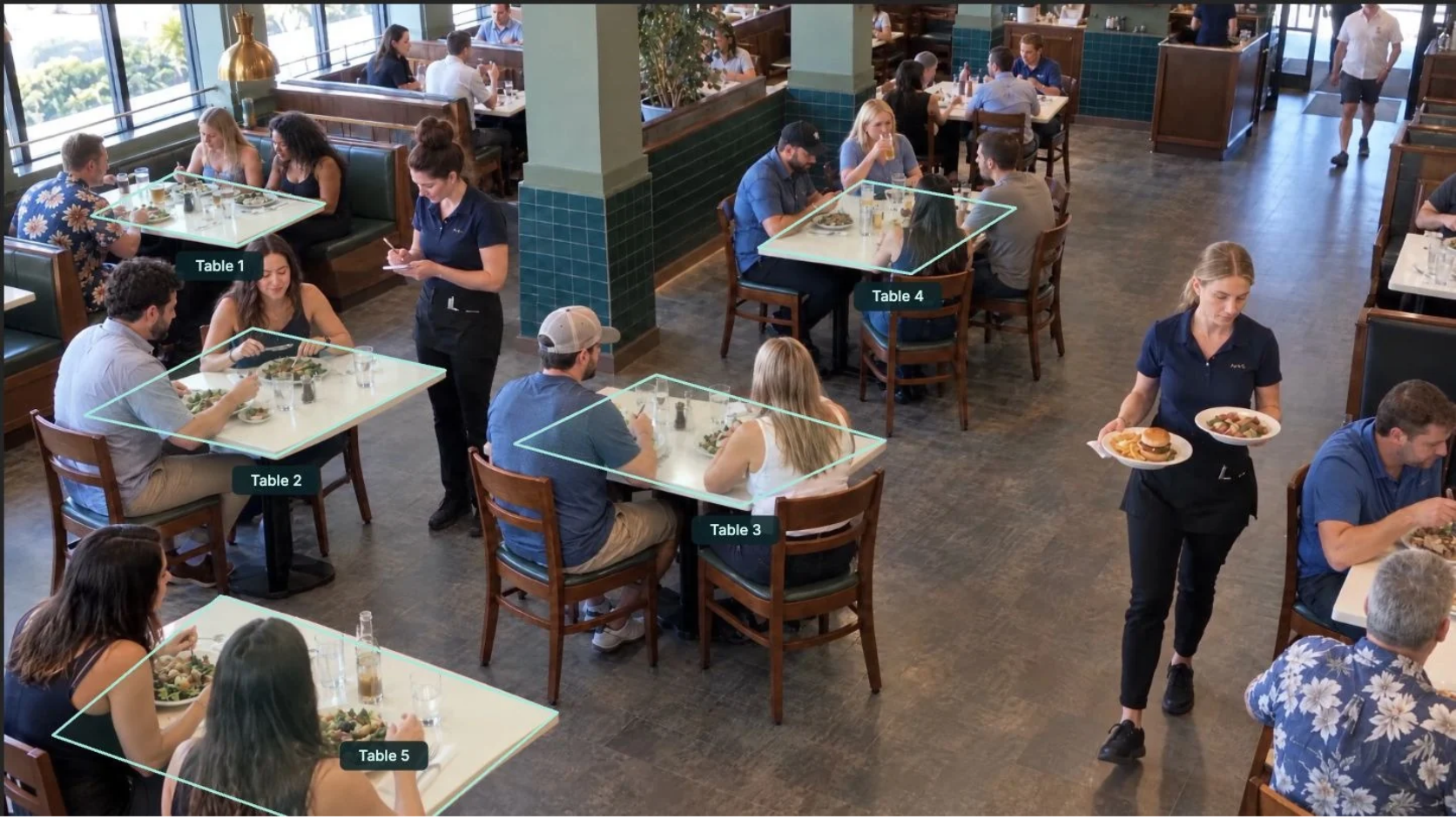
Shire Intelligence is building restaurant software around what cameras can see between an order being placed and a check being paid. Its system uses existing CCTV to identify service tasks and help hosts, servers and bussers coordinate during a shift.
A guest ready to order, a table that needs clearing and a server with too many parties are different problems with a common dependency: someone has to notice. Shire aims to give the team a shared view of those moments, then direct attention to the next task.
The company was founded by Cameron Kuperman, Alex Tabaku and Harshith Guduru. In its YC launch announcement, Shire says it is operating in 13 restaurants and reports an average 12% reduction in table-turn time across its live locations. Those are company-reported early results; the announcement does not provide an independent evaluation or the underlying measurement methodology.
Watch Shire’s original launch video.
The product starts with the cameras a restaurant already has. Shire says it can notify servers when guests are ready to order or pay, alert staff to tables that need clearing and guide seating using each server’s current workload. The aim is to turn a view of the dining room into specific actions for the people working in it.
That approach addresses a gap the founders describe in traditional point-of-sale software. A transaction system records when an order enters the kitchen or a bill closes. It offers less visibility into the stretch between those events, when guests may be waiting and staff may be balancing several competing requests.
The founders bring experience from both sides of that problem. According to the launch, Kuperman and Tabaku have known each other since kindergarten and spent years working together in restaurants. Tabaku went on to manage two large restaurants, while Kuperman worked in service. Guduru brings technical experience that includes graph research published in Nature and reinforcement-learning work at Bastazo. The three say they left Duke and Clemson after a year of building together to work on Shire full-time.
Beyond immediate alerts, Shire describes using service patterns to inform staffing, reservations, pricing and table-turn decisions. Its proposed advantage is a more current picture of the floor: which tables are progressing through a meal and which team members have capacity, rather than relying only on past sales or average wait times.
For restaurant operators, the practical test is whether that additional visibility makes a shift easier to run. The camera feed is an input; the useful outcome is a timely task reaching the person who can act on it. Shire is seeking more restaurant owners, groups and POS distributors to work with as it expands that approach.
Lorem ipsum dolor sit amet, consectetur adipiscing elit. Suspendisse varius enim in eros elementum tristique. Duis cursus, mi quis viverra ornare, eros dolor interdum nulla, ut commodo diam libero vitae erat. Aenean faucibus nibh et justo cursus id rutrum lorem imperdiet. Nunc ut sem vitae risus tristique posuere.

Built for Delaware C-Corps. Trusted by 2,000+ startups.












Copyright © Fondo (BloomJoy, Inc.)