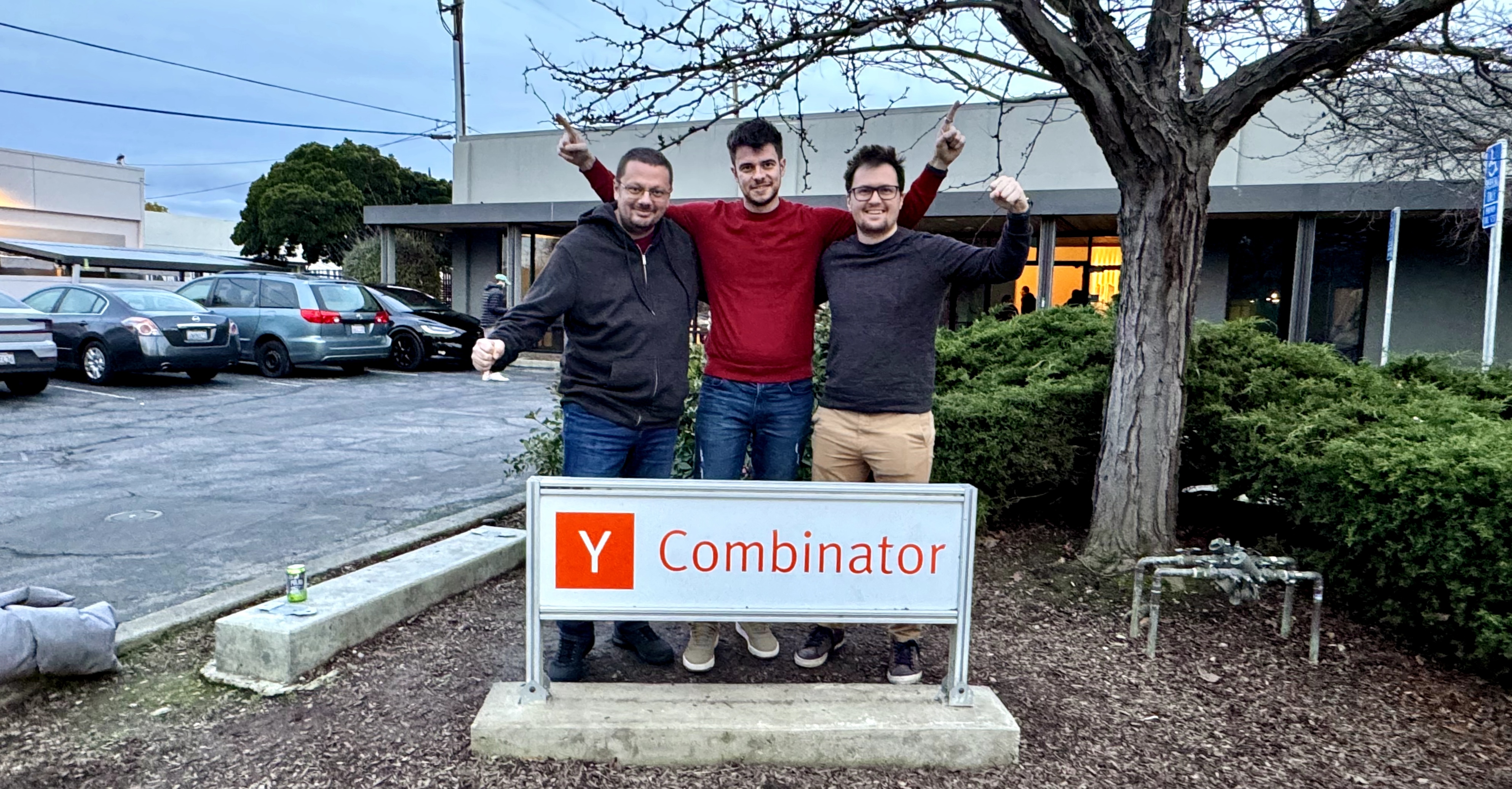

OpenScaffold is building a context layer for teams that deploy software for customers. The Fall 2026 Y Combinator company's product gathers information scattered across code repositories, support tickets and meeting recordings, then supplies the relevant customer details to coding agents.
Its founders, Rushil Knagaram and Param Mehta, previously worked together at Usul, another YC company. They joined as employees number one and three and say they led deployments for large U.S. government contractors. That experience informs a product focused on the work required to get a particular customer live, rather than software development in the abstract.
An implementation team may have the code needed to resolve an issue but still need to understand why a customer requested a behavior, what was agreed in a meeting or how an earlier deployment was configured. OpenScaffold describes that information as fragmented across the tools teams already use.
The company aims to bring those records together into continuously updating models of each customer. When an engineer needs to ship a feature, resolve a bug or take over an existing account, the product retrieves customer-specific context and passes it to the coding agent doing the work.
This is not presented as a replacement for the team's repository or support system. The launch emphasizes connecting information from those sources so that an agent can act with a more complete account of the customer's needs. The retrieval step is what connects the customer record to a concrete engineering task.
OpenScaffold also says it turns successful deployment work into reusable playbooks. That extends the product beyond finding information: work completed for one implementation can become a process the team can use again, rather than knowledge that remains only with the person who performed it.
The announcement is brief and does not publish a detailed integration list, pricing or measured customer deployment improvements. It also does not establish how permissions and source access are handled across customer accounts. Those details remain questions for an evaluation rather than capabilities to infer from the company's positioning.
Deployment teams should spend less time reconstructing customer history before an agent can begin useful work. OpenScaffold is inviting teams that want to get customers live faster to book a conversation with its founders.
Lorem ipsum dolor sit amet, consectetur adipiscing elit. Suspendisse varius enim in eros elementum tristique. Duis cursus, mi quis viverra ornare, eros dolor interdum nulla, ut commodo diam libero vitae erat. Aenean faucibus nibh et justo cursus id rutrum lorem imperdiet. Nunc ut sem vitae risus tristique posuere.

Built for Delaware C-Corps. Trusted by 2,000+ startups.












Copyright © Fondo (BloomJoy, Inc.)